Prosperity, People, Planet: European business priorities for the new EU cycle

BusinessEurope and all its members propose their priorities for the European Union in a new political cycle in 2019-2024. Prosperity, people and the planet – these are the three pillars for a successful Union that should be a source of inspiration for future political decisions.

BusinessEurope President Pierre Gattaz said: “European entrepreneurship has a unique feature. It feels responsible for and cares about prosperity, people and the planet. Companies have a central role to play. Achieving environmental and social goals largely depends on their success: without profitable companies, no inclusive growth, no jobs, no technological solutions to protect the environment.”

European businesses identified 30 priority areas for action by the EU in the coming five years.

“The agenda for the EU for the next 5 years must bring about modern, forward-looking EU policies adapted to the global shifts of the 21st century. The world is on its way to a new geo-economic order. To strengthen European sovereignty, the EU must speak with one voice and row in the same direction. If we want to maintain our standard of living and be a credible example to the rest of the world, we must ensure the economic success of our continent,” Gattaz added.

Read our priorities here: www.euyourbusiness.eua

Creating an Organization as a living organism: The case of Roche  

We are excited to invite you to the first event of the fall, part of the “Leading Creatively” Discussion Series, organized by the SEV Center of Excellence in Creative Leadership. The event will be held on Wednesday, October 16, 2024, from 18:00 to 19:30, at Alba Graduate Business School (Xenias 6-8, Athens, 11528). Our guest speaker is Kostas Kefalakis, Chief Transformation Officer at Roche Hellas

The event, will be conducted in Greek and you may attend in person or online, via livestream.

Register here 

In order to respond to today’s challenging business environment, most organizations try to shed traditional structures and strive to be more adaptive, resilient, and agile. This transformation requires not only a shift in operating model but a fundamental reimagining of leadership, culture, and governance. In this presentation, we explore how Roche Pharmaceuticals evolved into an organization that functions like a living organism—dynamic, responsive, and anti-fragile, characterized by decentralized leadership, trust-based governance, and a culture of continuous innovation.

To a large extent, this transformation is inspired by the five phases of organizational evolution as outlined by Frederic Laloux in “Reinventing Organizations”, from hierarchical and mechanistic entities to organic, self-managed, and purpose-driven collectives. Roche’s journey reflects this evolution, having successfully transitioned from a traditional, bureaucratic organization to one that fosters greater autonomy, accountability, and empowerment at every level.

The organization as a living organism is a complex, adaptive system capable of thriving in a fluctuating external environment by decentralizing decision-making to respond to emerging challenges in real time. This adaptive model is underpinned by self-organizing teams with autonomy and accountability being distributed across all levels of the organization.

Moreover, instead of long-standing organizational norms around budgeting, career path development, and decision-making hierarchies companies seek more adaptable systems that allow for flexibility in resource allocation. For example, performance management systems focusing on long-term value creation drive purpose-driven organizations where success is measured by the real-world impact on stakeholders.

Leaders in this model act not as controllers but as enablers and facilitators, guiding the organization through trust-based relationships. Executives act as stewards of the company’s vision and curators of the organizational climate rather than as micromanagers.

About the speaker

Kostas Kefalakis has more than 19 years of experience working in Lean, Agile and cultural transformation.

He started his career in Toyota Motor Europe in 2005 as a project manager responsible for coordinating 5 manufacturing plants, R&D and aftersales to improve initial quality & durability.

In 2011 Kostas moved to Vistaprint in Switzerland as a Global Lean Manager running projects & driving Lean, Agile & cultural transformation in sites across Europe, China, Australia, USA and Canada.

At the end of 2014, he moved to Hilti in Liechtenstein as a Global Lean Manager implementing Agile in R&D and Lean across numerous manufacturing plants and logistics sites in Europe, US and China before taking the role of Head of Global Lean bringing a new culture of Lean & Agile across the organization.

In his time with Hilti he was also invited as a guest speaker to ETH, Lancaster university and IMD.

Today Kostas is the Chief Transformation Officer of Roche Hellas responsible for driving the radical cultural transformation as well as digital transformation and is involved in many global strategic initiatives bringing value beyond Greece.

BusinessEurope Reform Barometer 2019 – Building an EU for European businesses to succeed globally

BusinessEurope’s EU Reform Barometer 2019 “Building an EU for European Businesses to succeed globally”, published on 20 March 2019, shows that the EU needs to do more to improve its competitiveness as EU growth has now been lower than US growth for 7 of the last 10 years. In addition, the Reform Barometer contains our annual survey of our member federations regarding progress on structural reform.

This year’s Reform Barometer looks in particular at how Europe is falling behind in its ability to develop world-leading firms.

We arrive at this conclusion for 3 reasons:

  • None of the top 10 global companies by market capitalisation are European.
  • Western Europe’s share of the top 10% of global firms in terms of profitability has dropped from 36% in the late 1990s to 24% now.
  • Finally, when considering large high-growth firms/’unicorns’ (start-ups that have reached 1 billion dollar market value within a short timeframe), the EU has not matched other regions when it comes to developing such firms, with the number and average value of unicorns in the EU significantly smaller than those in the USA and China.

Against this background it is concerning that, according to our survey of member federations, governments have failed to step up their reform efforts.  Our member federations consider that member states have satisfactorily implemented only 20% of the essential reforms agreed with the EU.

Detailed assessments by national member federations of progress on the country-specific recommendations (CSRs) issued by the European Commission for Greece can be downloaded below.

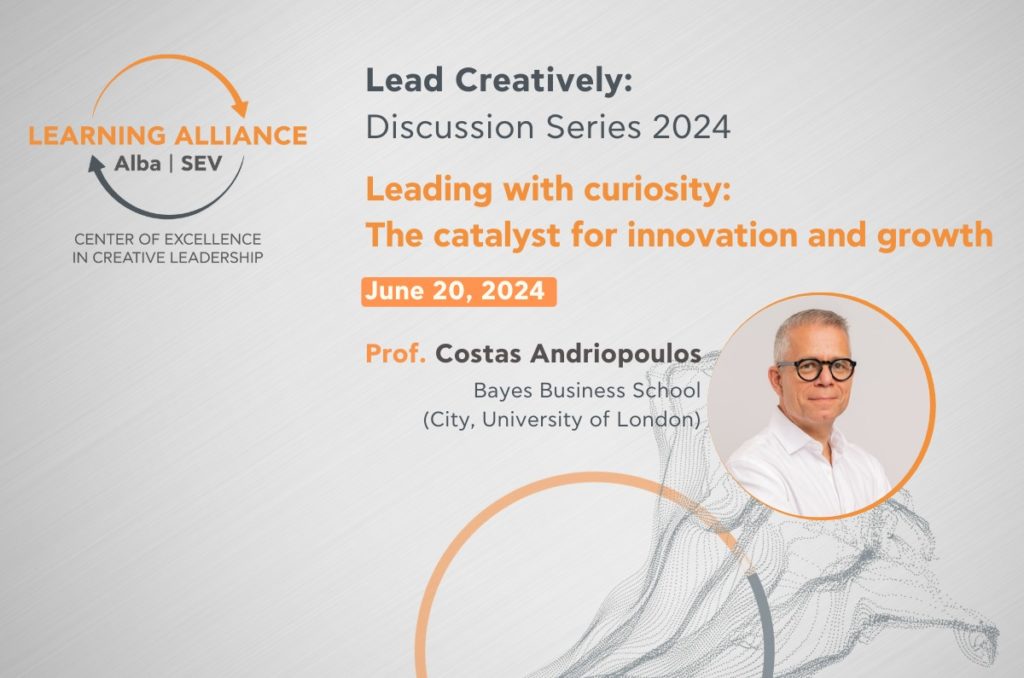
Leading with curiosity: The catalyst for innovation and growth

The SEV Center of Excellence in Creative Leadership invites you to one more “Lead Creatively: Discussion Series” event on Thursday, June 20 , 2024, 18:00-19:30 at Alba Graduate Business School (6-8 Xenias str, Athens, 11528).

The event, featuring Professor Costas Andriopoulos, Bayes Business School (City, University of London) will be conducted in English, with simultaneous translation into Greek available for those who require it. You may attend in person or online, via livestream.

Register here

In this engaging talk you will discover the power of curiosity as a catalyst for personal and professional growth. Through thought-provoking insights and practical examples, Costas will explore how we can all harness the potential of purposeful curiosity to drive innovation, enhance decision-making, and achieve sustainable success. You will gain a deeper understanding of how curiosity fuels creativity, unlocks hidden potential, and leads to breakthrough ideas. By embracing curiosity as a strategic advantage, we can unlock new pathways to profit and long-term organizational success.

Join us to understand the transformative power of curiosity in driving creativity and innovation; develop strategies for cultivating a culture of curiosity within teams and organizations; and to leverage purposeful curiosity for identifying and capitalizing on untapped market opportunities.

About the speaker:

Costas Andriopoulos is Professor of Innovation and Entrepreneurship and serves as the Associate Dean of MBA programs at Bayes Business School (City, University of London). Costas ranks in the top 3% globally in innovation management based on citation count. He is deeply committed to education, equipping founders, and leaders with the tools to think differently, encouraging them to take calculated risks, and guiding them to make decisions that lead to meaningful and impactful innovations. Costas also played a pivotal role in establishing Bayes X, a prominent research centre dedicated to innovation and disruption. He has co-authored the textbook “Managing Change, Creativity and Innovation” (5th Edition, Sage, 2024) and authored “Purposeful Curiosity: How asking the right questions will change your life” (Hachette Books, 2022; Yellow Kite Books, 2023), a popular book that delves into the transformative power of purpose-driven curiosity for success and fulfilment. Additionally, he is the Director of Avyssos Advisors Ltd., a consultancy specializing in innovation management.

www.andriopoulos.org

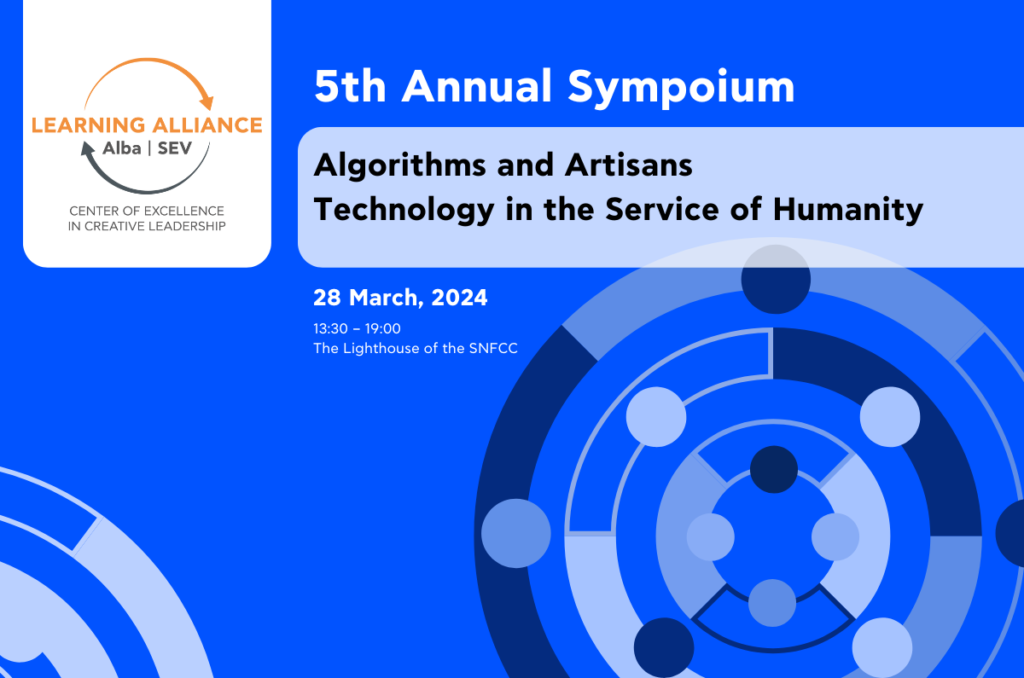
5ο Annual Symposium Algorithms and ArtisansTechnology in the Service of Humanity

  • Date: Thursday 28 March 2023
  • Time: 13:30 – 19:00
  • Location: The Lighthouse of the Stavros Niarchos Foundation Cultural Center plus livestream.

As technology, once more, confronts us with a new wave of machines replacing human labor, one of the greatest challenges facing leaders today is finding ways to organize work that reinforces human aspirations, imbues it with purpose, and upholds our values.

After all, leaders lead humans, not algorithms.

Few words about the panel discussions.

Panel 1: Beyond Automation: Leading Through the AI Disruption  | Artificial intelligence is ushering in a new cycle of transformation for businesses, especially with the advent of generative AI. What changes do we foresee in skills, work organization, operating models, and strategy?

Panel 2: Data-driven Healthcare: Innovating with AI for Better Outcomes | Data and algorithms are unlocking the mysteries of biology, opening new avenues for treatment, and contributing to the efficient and effective organization of the healthcare system. However, while we look forward to the latest scientific and technological advances, we also care about our privacy and yearn for the compassion and empathetic attention of our doctor.

Panel 3: The Art of Never Settling: The Case Study of Interamerican’s Agile Transformation | Interamerican has recently concluded an ambitious agile transformation journey spanning nearly all of the company’s operations. What lessons can we glean from Interamerican’s experience, and conversely, what insights can Interamerican gain from the transformation journeys of other firms? As the leadership team strives for continuous enhancement, what advice would you offer them?

Panel 4: Breaking Bread: Reconnecting in the Digital Age | In an era dominated by virtual realities, the humble yet essential and timeless bread is a reminder of authentic relationships. The relationship between people around the table, between people and their nourishment, the farmer and the earth, the artisan baker and his craft. This panel is a contemplation on how innovation can coexist with tradition in nourishing the mind as well as the body and the soul.


Visions of Tomorrow: How Science Fiction helps us imagine and shape the future

The SEV Center of Excellence in Creative Leadership welcomes 2024 with a “Lead Creatively: Discussion Series” event on Wednesday, January 31, 2024, 18:00-19:30

The event will take place at Alba Graduate Business School (6-8 Xenias str, Athens, 11528) and will be held in the Greek language. You may attend in person or online, via livestream.

Register here https://resources.alba.acg.edu/sev-coe-cl-event-registration-jan2024

Imagine traveling back in time to the not so distant 2005 or 1995 or 1985. How would you explain to people back then our life in 2024? What would they think or feel about your stories? How might we react to the stories of a time traveler from, say, 2035 or 2045?

In our world of accelerated change, time is compressed and the future that once seemed distant, every so often becomes present to the surprise of many. Therefore, science fiction challenges us to think ahead about the future consequences of today’s choices.

Science fiction stories help us speak about the future. The storyteller invites us to take seriously certain hypotheses and test their logical conclusion. What will the world look like, how will society change and transform, and what role will machines have in our lives and survival? Each scenario takes its cue from a situation present today and projects it to the future, creating an endless array of possibilities. Films specifically, attempt to both narrate and visualize this future: the technologies, the lifestyles, the human race itself. Watching science fiction films allows for an immersive dive into these thought experiments. The audience joining such a journey gains glimpses into what could be and how the world may look like in a more or less distant future.

It is no surprise that current anxieties and moral panics feed into future projections, painting the world in all sorts of bleak dystopias. Dystopias have accompanied societies over the centuries, from Plato’s allegory of the Cave, to Hieronymus Bosch’s Garden of Earthly Delights, to James Cameron’s Skynet. Each dystopia serving a specific cultural moment and highlighting the pitfalls, paradoxes, and boundaries of our choices as far as imagination will allow us to see.

How do science fiction films manage to present these dystopias convincingly? What is there to learn from sci fi dystopias? Is there a moral benefit to imagining the worst-case scenario? What would it mean for science fiction films to depict utopias instead of dystopias? Would that be meaningful or even possible given our present state of pessimism and social outrage?

 About the speaker

Melenia Arouh, Ph.D., is an associate professor at Deree – The American College of Greece, teaching courses since 2005 in the Communication, Philosophy and, most recently, Cinema Studies programs. Her current teaching includes such courses as Philosophy and Cinema, Aesthetics, American Cinema, and Film Analysis. Most recently she led the validation of the new Cinema Studies BA at Deree College and served as the head of the Communication department. Her research interests are in film, television, and digital media, and she is primarily interested in interdisciplinary scholarship that links film and media theory with philosophical enquiry. Specifically, she has published articles and chapters on cinematic space, aesthetics and film form, moral and cultural interpretations of films, online fandoms and toxicity, and the impact of Hamilton: An American Musical on culture and aesthetics.

In the Age of Agile, Is There Room for Strategic Marketing Planning?

The SEV Center of Excellence in Creative Leadership invites you to one more “Lead Creatively: Discussion Series” event on Wednesday, November 22, 2023, 18:00-19:30 at Alba Graduate Business School (6-8 Xenias str, Athens, 11528).

The event will be held in the Greek language. You may attend in person or online, via livestream.

Register here : https://resources.alba.acg.edu/sev-coe-cl-event-registration-november22

Can strategic marketing planning, a long-established cornerstone of marketing theory and practice, coexist with the demands of today’s agile, rapidly changing business environment? How can companies reconcile the need for disciplined, long-term planning with the necessity for innovation and flexibility in the face of market volatility? Join us in a presentation of recent research suggesting that marketing planning should not be abandoned but rather evolved, integrating dynamic capabilities to transform continuously in response to market changes.

Strategic marketing planning is essential for achieving a positional advantage. It sets a long-term direction and develops resources to maintain superiority over competitors. However, the rigidity of traditional planning methods has been a point of contention, where too much formality can impede adaptability and response to market dynamics.

Professor Vasilis Theoharakis will introduce the concept of dynamic strategic marketing planning that integrates traditional marketing planning capabilities with the agility to reconfigure processes and resources rapidly. He will explain how dynamic strategic marketing planning enhances organizational performance by preventing the development of rigidities traditionally associated with marketing planning. By embracing a paradoxical approach that combines planning with flexibility and spontaneity, dynamic strategic marketing planning allows firms to preempt market trends and react swiftly to emerging opportunities.

He will further discuss with the audience the importance of senior management’s role in the process of ensuring that strategic objectives are clearly communicated and effectively monitored for achieving revenue growth and value creation.

About the speaker

Vasilis Theoharakis is a Professor of Strategic Marketing and Director of the Centre of Strategic Marketing & Sales at the Cranfield School of Management. He is a partner and member of the management team of the PJ Tech Catalyst fund, a venture capital fund that invests in seed stage technology start-up companies. As a board member of NYC based Pollfish representing PJ Tech, he oversaw the sale of the company to Prodege, a California based unicorn. He led the creation of the advisory board at Innoetics, a global innovator in text to speech software, which managed the successful acquisition of the company by Samsung. Among other ventures, he co-founded and was chairman of a successful nanotechnology company that he grew to reach exports in 25 countries. Vasilis has spent several years in Silicon Valley at senior level marketing and business development positions with high-tech start-ups and companies such as 3Com. He started his career as a research engineer at IBM’s prestigious T.J. Watson Research Center where he won the Research Division’s Award. He holds a B.Eng. (honours) from the State University of New York at Stony Brook, an M.Sc. in Electrical Engineering and an M.B.A. (with distinction) from New York University, and a Ph.D. in Marketing and Strategic Management from the University of Warwick. He has taught at the European School of Management and Technology (ESMT) in Berlin, City University, Cass Business School in London, University of Sheffield, University of California – Berkeley, ALBA, Aston University, University of Cyprus and Golden Gate University.