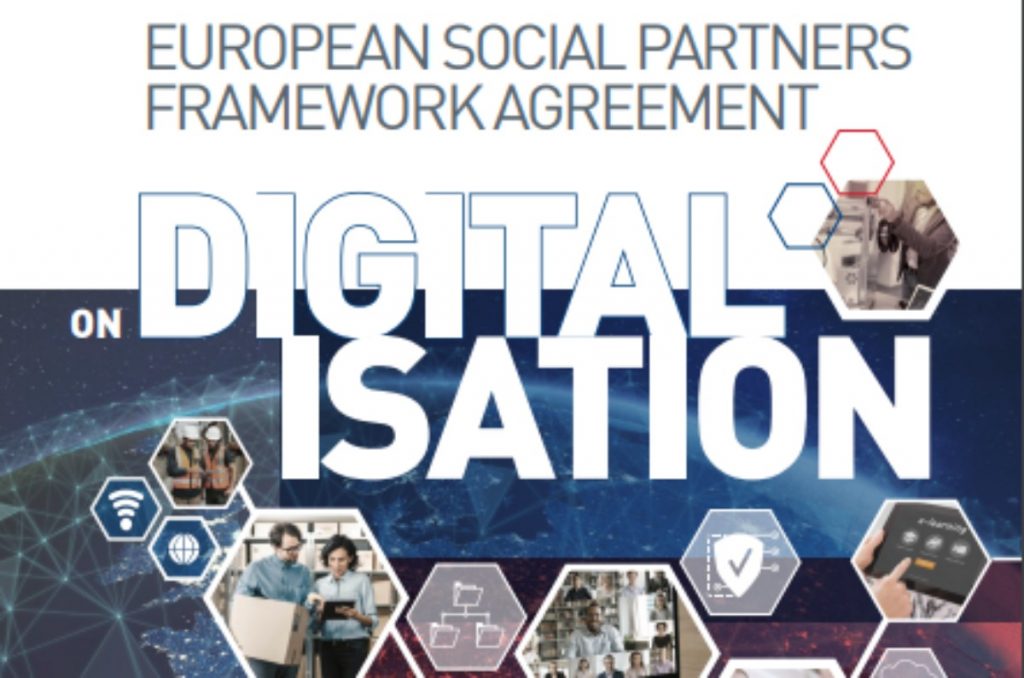

European social partners framework agreement on digitalisation

The digital transformation of the economy is a multifaceted topic with large implications for labour markets, the world of work and society at large. It is dealt with in a variety of ways by EU member states, due to different social and economic situations, labour markets and industrial relations systems and existing initiatives, practices and collective agreements.

The digital transformation brings clear benefits for employers, workers and jobseekers alike, in terms of new job opportunities, increased productivity, improvements in working conditions and new ways of organising work and improved quality of services and products. Overall, with the right strategies, it can lead to employment growth and job retention.

The transition also comes with challenges and risks for workers and enterprises, as some tasks will disappear and many others will change. This requires the anticipation of change, the delivery of skills needed for workers and enterprises to succeed in the digital age. Others include work organisation and working conditions, work life balance and accessibility of technology, including infrastructure, across the economy and regions. Specific approaches are also needed for SMEs to embrace digitalisation in a way that is tailored to their specific circumstances.

Since the gains are not automatic, we need to adapt our labour markets, education and training, and social protection systems to make sure the transition is mutually beneficial for employers and workers. The EU and national governments have an important role to play, by ensuring that the framework conditions allow and support employers and workers to grasp the opportunities and leave them space to find appropriate solutions to deal with the challenges, bearing in mind that they know best the situation on the ground and what measures are needed to benefit enterprises and workers.

It is also important to take into account the climate and environmental impacts.

Furthermore, a shared commitment is needed on the part of employers, workers and their representatives to make the most of the opportunities and deal with the challenges in a partnership approach, whilst respecting the different roles of those involved.

This framework agreement is the shared commitment of the European cross-sectoral social partners – BusinessEurope, SMEunited, CEEP and the ETUC (and the liaison committee EUROCADRES/ CEC) – to optimise the benefits and deal with the challenges of digitalisation in the world of work.

Aims
This framework agreement aims to:

  • Raise awareness and improve understanding of employers, workers and their representatives of the opportunities and challenges in the world of work resulting from the digital transformation;
  • Provide an action-oriented framework to encourage, guide and assist employers, workers and their representatives in devising measures and actions aimed at reaping these opportunities and dealing with the challenges, whilst taking into account existing initiatives, practices and collective agreements;
  • Encourage a partnership approach between employers, workers and their representatives;
  • Support development of a human-oriented approach to integration of digital technology in the world of work, to support/assist workers and enhance productivity;
    By:

Outlining a joint dynamic circular process, which takes into account the different roles and responsibilities of the different actors and can be tailored to different national, sectoral and/ or enterprise situations, industrial relations systems, jobs and different digital technologies/tools;
Highlighting concrete approaches, actions and measures, which employers, workers and their representatives can use, according to their specific needs and circumstances, to tackle topics such as skills, work organisation and working conditions.

Labour Market, Skills & Social Affairs


Labour Market, Skills & Social Affairs

Rapid technological, economic, and demographic changes are reshaping the labour market, creating new challenges as well as significant opportunities for businesses, workers, and policymakers. Strengthening productivity, competitiveness, and social cohesion requires a modern labour environment, investment in skills, and a stronger alignment between education, training, and the needs of the economy.

SEV supports the development of a competitive and inclusive labour relations framework that promotes the creation of quality, sustainable, and well-paid jobs, while respecting labour rights, occupational health and safety, and the principles of social dialogue and free collective bargaining.

At the same time, SEV promotes policies and initiatives aimed at developing the knowledge and skills required for the digital and green transition, with a strong emphasis on lifelong learning, reskilling and upskilling, closer cooperation between businesses, educational institutions and training providers, and the creation of a modern and reliable skills and employment ecosystem.

As an institutional social partner, SEV actively participates in public dialogue and policymaking on labour market, education, training, and employment issues, contributing to a productive, resilient, and human-centric growth model.

  • Modern and competitive labour relations framework: Modernization, simplification, and codification of labour legislation to align with contemporary European and international practices, enhancing competitiveness, adaptability, and legal certainty in the labour market.
  • Sustainable tax and social security framework for employment and entrepreneurship: Reduction of non-wage labour costs, fair taxation of salaried employment, and the establishment of a balanced tax and social security framework that supports lawful employment, competitiveness, and the creation of quality jobs.
  • Modern work organization and effective labour market governance: Development of a modern regulatory framework that addresses the impact of technological progress, the digital transition, and demographic changes, while enhancing flexibility and adaptability in work organization and promoting the digital transformation of the labour market, with the aim of reducing bureaucracy and tackling undeclared work.
  • Enhanced social dialogue and free collective bargaining: Strengthening meaningful and open social dialogue that contributes to balanced wage-setting and labour frameworks, supports competitiveness, and promotes social cohesion and labour peace.
  • Safe and healthy working environment: Promoting a modern prevention culture and a systematic approach to Occupational Health & Safety management, with emphasis on education, the use of new technologies, and the creation of safe and healthy workplaces.
  • Skills development and lifelong learning: Strengthening the knowledge and skills of the workforce through modern education, training, reskilling, and upskilling systems, ensuring alignment with the needs of the digital and green transition and the modern economy.
  • Inclusion, equal opportunities, and youth employability: Promoting an inclusive labour market with equal opportunities for access and professional development for all, while strengthening the connection between education, entrepreneurship, and employment, particularly for young people.
  • Collective bargaining and social dialogue: SEV participates in collective labour agreement negotiations at national level (National General Collective Labour Agreement), sectoral level, and supports the development of company-level agreements. In parallel, SEV contributes positions and proposals to the process for determining the statutory minimum wage, taking into account the needs and capacities of member companies. SEV also actively participates in institutionalized tripartite consultation bodies and social dialogue mechanisms to promote balanced and mutually beneficial labour market policies.
  • Policy advocacy and international representation: SEV participates in European and international organizations, bodies, and committees, contributing to international cooperation while providing members with access to information, networking opportunities, and insights into European and global labour market developments. At national level, SEV develops positions, proposals, and interventions on labour market reforms and planned initiatives of the Ministry of Labour.
  • Support for businesses and human capital development: SEV designs and implements initiatives supporting companies in areas such as labour relations, social dialogue, Occupational Health & Safety, social security, and workforce management. Through workshops, events, and information sessions, SEV helps businesses navigate regulatory changes and adapt to the evolving world of work.
  • Skills4Jobs: Comprehensive initiatives focused on developing knowledge and skills in technical education professions and specialties, based on business needs. The initiative aims to support young graduates in their transition into the labour market while helping businesses access talent with the right skills.
  • SEV – Alba educational initiative “Learning Alliance”: In collaboration with Alba Graduate Business School, SEV implements a broad range of educational initiatives focused on knowledge, skills, and leadership development for employees of member companies. These include scholarships for postgraduate programs (covering 50% of tuition fees), free seminars on managerial and organizational skills, AI Bootcamps introducing businesses and executives to Artificial Intelligence applications, and knowledge-sharing events through the SEV Center of Excellence in Creative Leadership.
  • New specialties in Schools of Higher Vocational Training (SAEKs): SEV collaborates with sectoral industry representatives in designing curricula for new specialties aimed at addressing growing demand for specialized human capital across industrial sectors.
  • Applied specialization training: Leveraging the curriculum framework of SAEK specialties, SEV organizes specialized lectures delivered by business executives, directly linked to each field of study, within the course “Applied Specialization Training.”
  • Promoting inclusion and equality in the workplace: SEV actively contributes to improving the institutional framework for equal access and participation in the labour market and supports the development of modern inclusion and equality policies. At the same time, it organizes awareness, support, and guidance initiatives to help businesses adopt practices that strengthen the employment of underrepresented groups.
  • Junior Achievement Greece: SEV supports the work of Junior Achievement Greece, which promotes entrepreneurial education and familiarizes young people with the principles and values of entrepreneurship. In addition, SEV provides a five-year sponsorship (2024–2029), in memory of Odysseas Kyriakopoulos – founder of the organization and former SEV Chairman – supporting the “Virtual Enterprise” program offered free of charge to schools across Greece.
  • Industry4Youth: The initiative aims to connect students and university undergraduates in industry-related fields with real workplace environments at an early stage. To this end, SEV organizes company visits involving students from SAEKs – including SAEKs for Persons with Disabilities – as well as higher education institutions.
  • Labour Affairs Committee: The Committee brings together Human Resources Directors from SEV member companies. It serves as SEV’s strategic body for shaping positions on labour relations, collective bargaining, and social dialogue. The Committee focuses on proposals and initiatives aimed at fostering a competitive labour environment, improving productivity, enhancing labour market governance, promoting free collective bargaining, and supporting a fair tax and social security framework.
  • Health & Safety Committee: The Committee includes Directors and experienced executives from the Health & Safety departments of SEV member companies. It develops policy proposals for the establishment of a modern and effective framework for Occupational Health & Safety, the prevention of occupational risks, and the effective integration of modern technologies into the field of Health & Safety.
  • Labour Law Experts Group (ad hoc Working Group): The Group consists of legal advisors on labour issues and labour law attorneys who collaborate with member companies of SEV’s Board of Directors and Executive Committee. Its purpose is to provide ad hoc input and facilitate the exchange of views on critical legislative initiatives related to labour matters.
  • Human Capital Affairs Committee: The Committee’s objectives include identifying and addressing business needs in knowledge and skills, strengthening the link between Initial and Continuing Vocational Education and Training and entrepreneurship, developing a national skills and professions ecosystem, and modernizing general education to support the transition to a modern Knowledge Economy.
  • Inclusion & Equality Committee: The Committee promotes initiatives that strengthen inclusion and equality in the workplace, as well as the accessibility and sustainability of employment for underrepresented groups, with a focus on three main thematic areas: Persons with Disabilities, Age Discrimination, and Women.
  • Ad hoc Working Groups, workshops, and events dedicated to the development of positions and proposals on skills issues (both transversal and vocational), education and training policies and systems, and employment promotion initiatives, including Initial and Continuing Vocational Education and Training, apprenticeships, internships, and programs and initiatives implemented by DYPA.
  • Advisory and consultative bodies established by the State in the context of designing and implementing education and employment policies (e.g. Regional Councils for Linking Vocational Education and Training with Production and the Labour Market).


CONTACT PERSON

Katerina Daskalaki
Director of Labour Affairs & Social Dialogue

Email me

CONTACT PERSON

Dora Economou
Director of Human Capital Affairs

Email me


Related

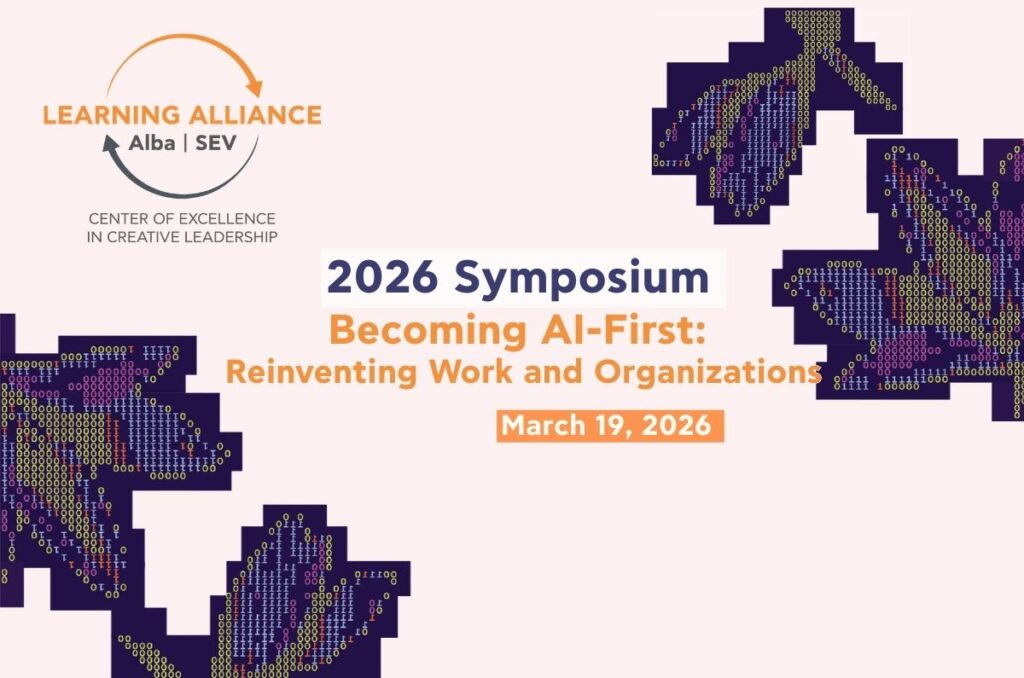
2026 Symposium “Becoming AI-First: Reinventing Work and Organizations”

2026 Symposium | SEV Center of Excellence in Creative Leadership: “Becoming AI-First: Reinventing Work and Organizations”

Thursday, 19 March 2026 | 09:00 – 15:30

Pharos, Stavros Niarchos Foundation Cultural Center (SNFCC)

We are at the cusp of a transformation unlike anything before it. AI is not coming to automate processes — it is coming to redesign the way we organize work, make decisions, and create value.

Most companies today are using AI to do faster what they already did. The real question is different: if you were building your organization from the ground up today — no legacy systems, no inherited org chart, no “this is how we’ve always done it” — with AI as the founding principle, how would you go about it? What opportunities would you prioritize?

This is the essence of the challenge facing most companies today: Becoming AI-First.

Keynotes

Marshall Van Alstyne, Professor, Boston University “Deepfakes and Deep Decisions: Using Markets to Clear Misinformation”

AI generates misinformation at industrial scale. The problem has a precise economic structure — and a market-based solution that makes truth cheap and lying expensive, without censorship or central authority.

Shane Greenstein, Professor, Harvard Business School “Commercial Breakthroughs and the AI Gold Rush”

What separates winners from the rest is not the technology — it is the organizational redesign required to translate AI into lasting business value. History has a clear pattern. This keynote explains where the value actually accrues.

Panels

Two panels of Greek business leaders from Eurobank, Interamerican, HELLENiQ ENERGY, Olympia Group, Workable, Kotsovolos and Space Hellas bring operational reality to the table.

How the role of people is being redefined alongside AI agents, what a credible AI strategy actually looks like, and how competitive advantage is built in a world where everyone has access to the same tools.

Two keynotes that frame the intellectual stakes. Two panels that bring the business experience. And an event format that makes room for real conversation.

Register here


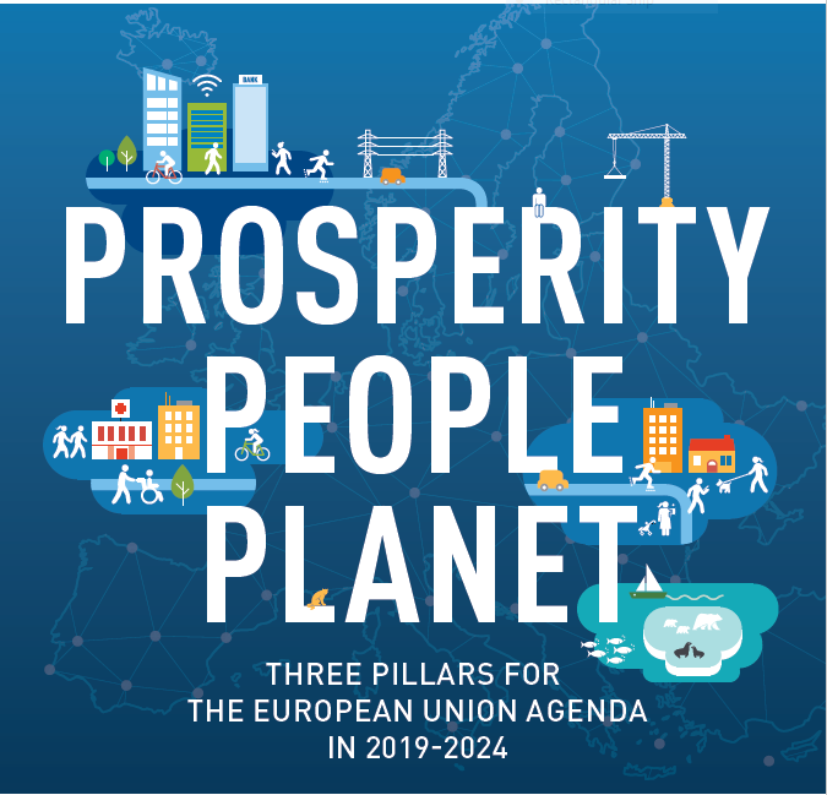
Prosperity, People, Planet: European business priorities for the new EU cycle

BusinessEurope and all its members propose their priorities for the European Union in a new political cycle in 2019-2024. Prosperity, people and the planet – these are the three pillars for a successful Union that should be a source of inspiration for future political decisions.

BusinessEurope President Pierre Gattaz said: “European entrepreneurship has a unique feature. It feels responsible for and cares about prosperity, people and the planet. Companies have a central role to play. Achieving environmental and social goals largely depends on their success: without profitable companies, no inclusive growth, no jobs, no technological solutions to protect the environment.”

European businesses identified 30 priority areas for action by the EU in the coming five years.

“The agenda for the EU for the next 5 years must bring about modern, forward-looking EU policies adapted to the global shifts of the 21st century. The world is on its way to a new geo-economic order. To strengthen European sovereignty, the EU must speak with one voice and row in the same direction. If we want to maintain our standard of living and be a credible example to the rest of the world, we must ensure the economic success of our continent,” Gattaz added.

Read our priorities here: www.euyourbusiness.eua

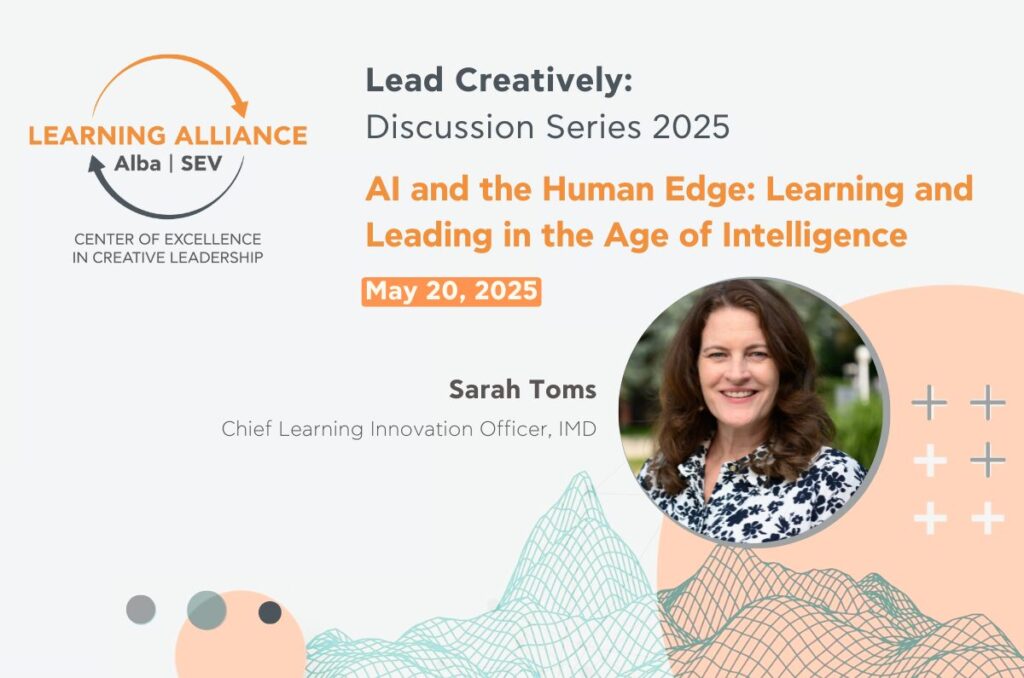
AI and the Human Edge: Learning and Leading in the Age of Intelligence

The SEV Center of Excellence in Creative Leadership invites you to the next event of the Leading Creatively Discussion Series, taking place on Tuesday, May 20, 2025, from 18:30 to 20:00 at Alba Graduate Business School (6–8 Xenias Str., Athens, 11528).

Our guest speaker will be Sarah E. Toms, Chief Learning Innovation Officer at IMD.

The event will be conducted in English only and held exclusively in person.
Please note: no livestream will be available.

Register here

 The rise of generative AI has triggered a fundamental rethinking of how leaders learn, make decisions, and shape organizational culture. While the technology itself is rapidly evolving, the deeper challenge lies in how we transform human systems: the way we exercise judgment, build trust, and lead people. In this conversation with Sarah Toms, Chief Learning Innovation Officer at IMD, we will explore what it means to lead when intelligence is no longer confined to people. AI is increasingly embedded not just in operations, but in the everyday routines through which organizations and individuals learn and adapt. From personalized learning paths and executive coaching bots to training role-plays and AI-augmented decision-making, the scope, scale and essence of leadership development is shifting fast. At the same time, this transformation raises more fundamental questions: How do we ensure that organizations don’t become only more efficient, but also more humane? How can AI amplify ethical awareness, emotional intelligence, and creativity—rather than displace them? What new skills are needed and what is the role of specialist expertise? This conversation will address the present state of the art as well as the medium- and long-term implications of AI for leadership, learning, and organizational transformation. Join us in a discussion on moving beyond AI as a tool—and toward AI as a force reshaping how we learn, grow, and lead.

About the speaker

Sarah E. Toms is Chief Learning Innovation Officer at IMD where she leads the Learning Innovation and AI strategy, and former executive director and co-founder of Wharton Interactive. She is a demonstrated thought leader in the educational technology field, fueled by a passion to find and develop innovative ways to make every learning environment active, engaging, more meaningful, and learner-centered. She has spent more than twenty years as a leader in the technology sphere, and was an entrepreneur for more than a decade. In addition, she is coauthor with Peter Fader of The Customer Centricity Playbook.