SEV: Greece and France strengthen their strategic partnership for a stronger and more competitive Europe
The Greece–France Economic Forum was held with the participation of leading institutional and business executives
With a strong presence of political and business representatives from Greece and France, the Greece–France Economic Forum took place on Saturday, April 25, 2026. The event was co-organized by SEV (Hellenic Federation of Enterprises) and the French-Hellenic Chamber of Commerce and Industry (CCIFG), within the framework of the official visit of the President of the French Republic, Emmanuel Macron, to Athens.
The Forum confirmed that Europe is called upon to move with greater speed, coordination, and strategic focus to leverage available resources and expertise. In this context, the cooperation between Greece and France emerges as a substantial example for strengthening European competitiveness and strategic autonomy in critical sectors such as defense, technology, and energy.
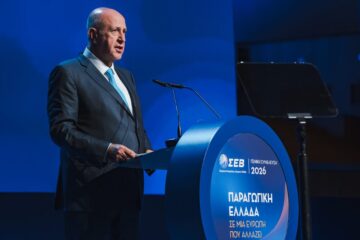
Opening the proceedings, the Chairman of the Board of SEV, Mr. Spyros Theodoropoulos, emphasized: “The relationship between Greece and France is one of trust with deep historical, political, and economic roots, a strong present, and even stronger prospects for the future. The Forum gives new impetus to an already essential economic cooperation, highlighting its dynamic and paving the way for more investment, trade, technological cooperation, and transfer of know-how.” Focusing on the European environment, he noted that “Europe is at a critical turning point and is called to redefine its position and answer a fundamental question: how it will ensure its economic resilience, energy security, and ultimately its geopolitical power, while simultaneously protecting its social model. To achieve this, it must be strengthened geopolitically, and for that reason, it must first become economically and productively stronger.”
For his part, the President of the CCIFG, Mr. Estève Speranza, noted: “The Greece–France Economic Forum, co-organized by SEV and CCIFG, took place in an environment of enhanced strategic cooperation, further strengthened by the visit of the President of the French Republic, Emmanuel Macron. Gathering nearly 300 business executives around critical issues such as innovation, defense, and energy transition, the Forum is a significant step toward developing new partnerships and investment opportunities, while simultaneously reinforcing Europe’s strategic autonomy.”
In his opening remarks, the Minister of National Economy and Finance and President of the Eurogroup, Mr. Kyriakos Pierrakakis, underlined: “Europe today faces decisions that will define the coming decades. It needs to invest in defense on a scale we haven’t seen for generations. In the energy transition. In technology. And yet, we still do not dare. We operate in terms of fragmentation. Twenty-seven budgets. Twenty-seven systems. Twenty-seven strategies. This is not sovereignty. It is weakness. We need more Europe. More common action. We need greater scale. The cooperation between our countries is proof that this can be done. The Franco-Hellenic strategic agreement of 2021 is the antidote to this logic of fragmentation.”
Next, the French Minister of Economy, Finance & Industrial, Energy, and Digital Sovereignty, Mr. Roland Lescure, noted: “The conclusion is indisputable: Europe possesses both the human potential and the available capital/financial resources; however, we must now transform them into real power. Together with my counterpart, we are committed to promoting this change. We must be able to direct these resources toward our priorities: defense, digital transformation, energy, and infrastructure. For this reason, I consider the acceleration of the Savings and Investments Union absolutely necessary, turning European funds into a strategic lever for a sovereign Europe. In a spirit of close cooperation, France and Greece play a decisive role in promoting this European integration.”
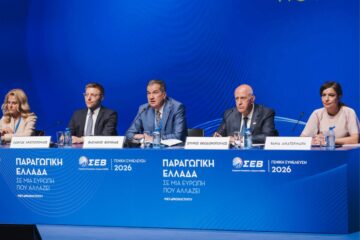
Through the four thematic discussions of the Forum, the key priorities for strengthening European competitiveness and strategic autonomy were highlighted:
Technology and Innovation
In the session on technology and innovation, moderated by Mr. Marcos Veremis (Partner at Big Pi Ventures, Co-founder of Upstream, Treasurer of the Board and Chairman of the Innovation Committee of SEV), the discussion focused on the conditions for developing sovereign European technologies and bridging the gap between research and the market.
Mr. Marcel Cobuz, Chairman of the Executive Committee of the TITAN Group, noted: “Europe has a unique opportunity to lead the next wave of industrial innovation, especially in the sectors of decarbonization and advanced technologies. At TITAN Group, we see this in practice – from developing the largest carbon capture and storage project in Europe, in Greece, to utilizing AI solutions in our operations. However, to fully realize this potential, Europe must accelerate capital mobilization, simplify the regulatory framework, and address structural challenges such as energy costs. With the right conditions, Europe will not merely close the gap with international competitors but can lead in areas like industrial AI and sustainable materials.”
Mr. Thierry Deau, Founder, Chairman & CEO of Meridiam, highlighted the role of infrastructure as a key factor for the development of digital technologies. He stressed that digital sovereignty cannot be achieved through software alone but requires infrastructure that needs long-term capital to be developed and maintained. He noted that power grids are among the most critical infrastructures, while interconnections and the broader architecture of electricity transmission and distribution form the physical backbone on which modern digital economies operate. Referring to Europe’s position, he pointed out its long tradition as a global leader in infrastructure, noting that the challenge today is to extend this leadership to the infrastructures of the future. Quantum computing is one such field where Europe has the potential to lead, provided it shows the will to take calculated risks, limit regulatory inefficiencies, and invest substantially in education, particularly in science and engineering.
Mr. Stéphane Boujnah, Chairman & CEO of Euronext, stated: “Europe does not lag in innovation; it lags in the mechanisms that allow for speed and scaling. A deeper and more effective framework for equity financing is essential if we want to compete meaningfully with the United States and China. In strategic sectors such as quantum computing, green technologies, and defense technologies, Europe has an opportunity to emerge as a leading force, provided that innovation is accompanied by the ability to mobilize capital and support/enhance growth on an industrial scale.”
Mr. Yannis Loumakis, CEO of Uni Systems, underlined: “Our participation in the Forum confirms the importance we attach to Greek-French cooperation in the fields of defense, technology, industry, and investment, which can serve as a model for broader European convergence. In my remarks, I highlighted the significant growth of the technology sector in our country, bolstered by funding from the Recovery Fund, and the need to continue state funding for the maintenance and support of the systems that were developed.” He also stressed the need for companies to immediately integrate Artificial Intelligence to remain competitive internationally. Finally, he emphasized that Europe as a whole must invest in these technologies to successfully compete with the USA and China.
Defense and Industrial Cooperation
In the defense session, moderated by journalist Ms. Alexia Kefala, the need to strengthen the European defense industrial base and overcome fragmentation prevailed.
Mr. Evangelos Mytilineos, Executive Chairman of METLEN, noted that the NATO Alliance is acquiring new characteristics, with more and more countries strengthening direct cooperation within a more complex geopolitical environment. He pointed out that the Greece-France partnership constitutes a characteristic example of converging strategic interests with a clear European dimension. At the same time, he highlighted the critical role of European industry, emphasizing that companies can leverage their significant expertise, creating terms of mutual benefit and strengthening their common defense base. Finally, he underlined that Greece can function as an equal industrial partner in advanced defense programs, observing however that in critical projects, such as frigates, the activation of this cooperation could have been initiated earlier to maximize benefits for the country and the European industry as a whole.
As Mr. Christian Hadjiminas, founder and CEO of THEON International, founder of EFA Group, and President of the Hellenic Entrepreneurs Association (EENE), pointed out: “The main challenge for the European Union in the field of defense is not a lack of technology, but fragmentation. European defense sovereignty can only be built through the unification of member states’ efforts and, more specifically, through joint procurement, strategic European industrial partnerships, and the development of secure and resilient supply chains. However, due to the national particularities of member states, this can only be achieved through alliances and an equal distribution of industrial work – a direction in which THEON is working systematically. THEON’s common and successful collaborations with French companies Exosens and Safran have already translated into exports of French and Greek defense products worth hundreds of millions of euros. The goal now is for French companies to treat Greece not just as a client, but as an equal industrial partner for global markets – something the Greek defense industry has proven in practice is absolutely feasible.”
Mr. Pierre Eric Pommelet, Chairman & CEO of Naval Group, stated: “Naval Group is proud to contribute to the operational excellence of the Hellenic Navy. The scope and depth of our cooperation with Greek industry are constantly being strengthened. We will continue to develop these partnerships through joint projects, within the framework of our long-term commitment to strengthening Greece’s shipbuilding and defense industry. Together, we are creating value for both our navies, while contributing to the security and strategic autonomy of Europe.”
Mr. Nicolas Groult, CEO of KNDS France, stated: “At KNDS, we are committed to contributing to a stronger and more integrated European defense. This ambition can only be achieved through trust, cooperation, and the development of strong industrial partnerships at the European level. Our collaboration on the ‘Philoctetes’ program with the Greek defense industry is a characteristic example of this approach: by combining our expertise with leading Greek partners, we are not only responding to Greece’s operational needs but also strengthening the overall European technological and industrial base in the defense sector.”
The IMEC Initiative and Geopolitical Dimension
A special discussion on the IMEC initiative (India-Middle East-Europe Economic Corridor) took place during the Forum, featuring Mr. Alexis Konstantopoulos (Ambassador and Special Representative for IMEC at the Ministry of Foreign Affairs of Greece) and Mr. Gérard Mestrallet (Special Envoy of the President of the French Republic for IMEC). The discussion was moderated by journalist Ms. Rallou Alexopoulou.
Mr. Mestrallet noted: “The Greek Minister of Economy reminded us that IMEC performs a strategic task within the framework of developments in the Middle East. The situation in the Strait of Hormuz further highlighted the importance of IMEC as an initiative aimed at reducing risks and strengthening the resilience of supply chains between these three continents.”
Energy and Competitiveness
In the energy transition session, moderated by Ms. Rania Ekaterinari (President of the Executive Committee & Vice Chair of the Board of SEV), the role of energy as a critical factor for competitiveness and European sovereignty was highlighted.
Mr. Bruno Bensasson, CEO of Akuo, mentioned: “France and Greece are strong European partners at all levels. Akuo is proud to contribute to this long-standing cooperation in the energy sector, as energy is a fundamental prerequisite for economic and social prosperity, as well as for sovereignty.” He added: “The signing of the Memorandum of Understanding with the companies Jasper Wind and AirEnergy S.A. reflects Akuo’s will to further strengthen its investment presence in Greece, work closely with reliable local partners, and contribute substantially to the country’s energy transition through the provision of affordable, locally produced, and sustainable electricity.”
Mr. Julien Hueber, CEO of Nexans, noted: “As electricity becomes increasingly competitive and geopolitically secure compared to hydrocarbons, Europe must leverage its own resources: a maritime territory of approximately 25 million square kilometers, abundant wind potential, and strong solar potential in the South. This requires investments in energy production, from offshore wind and solar to hydroelectric and nuclear, as well as the acceleration of interconnections between European countries to strengthen energy independence, the modernization of existing networks for greater resilience, and the promotion of the electrification of the economy, aiming to boost Europe’s industrial power. I would also like to express my thanks for the excellent organization, which was a significant success for Nexans in terms of both content and implementation.”
Mr. Andreas Athanasopoulos, CEO of Olympia Group, underlined: “Energy resilience does not depend only on the price of energy, but also on how effectively we manage it. Today, Europe is called to see the energy transition not just as an environmental goal, but as a matter of industrial survival and strategic sovereignty. With industrial electricity prices remaining multiple times higher than those in competing economies, the real answer is not just more production or more interconnections, but more energy efficiency at the point of consumption. Energy storage within each industry or storage unit and smart management systems (with Edge & Agentic AI) can dramatically reduce the cost base of businesses by reducing costs during peak periods, stabilizing networks, and strengthening the competitiveness of European industry. Therefore, there is a need for institutional realignment and a completion of the concept of energy storage within the enterprise itself, as well as the removal of barriers that currently prevent hundreds of large and medium-sized enterprises in Greece from utilizing these capabilities that produce tangible results.”
Mr. Alexandros Benos, CFO of Cenergy Holdings, underlined: “Europe must achieve a balance between decarbonization and energy security through targeted investments in energy infrastructure (networks and interconnections) and an effective regulatory framework (a single energy market and flexible rules), while simultaneously forming a realistic transitional solution based on gaseous fuels and strengthening its industrial base.” He also noted: “We all agree on ‘what’ needs to be done; the critical question is ‘how’ and ‘when.’ The energy transition requires investment in the industrial base, in skills, and in a resilient supply chain, as well as projects delivered with consistency. It also requires a Europe that actively protects its industry against unfair competition and distortive state subsidies from third countries.”
Mr. Pierre-Arthur Lestrade, Vice President Europe of EDF Power Solutions, stated: “A unified European approach combining strategy, policies, and partnerships is essential for ensuring energy resilience and adaptability in a rapidly changing environment. In this context, the strategic cooperation between Greece and France in the field of energy security is constantly being strengthened. Increasing investments in renewable energy sources, energy storage, and network interconnections will contribute to providing reliable, competitive, and sustainable electricity to European consumers.”
Within the framework of the Forum, in the presence of the Ministers of Economy of Greece and France, a development agreement was also signed between the companies Akuo, Jasper Energy, and AirEnergy. The agreement concerns seven wind farms, with a total capacity of 166 MW and a total investment exceeding 215 million euros.
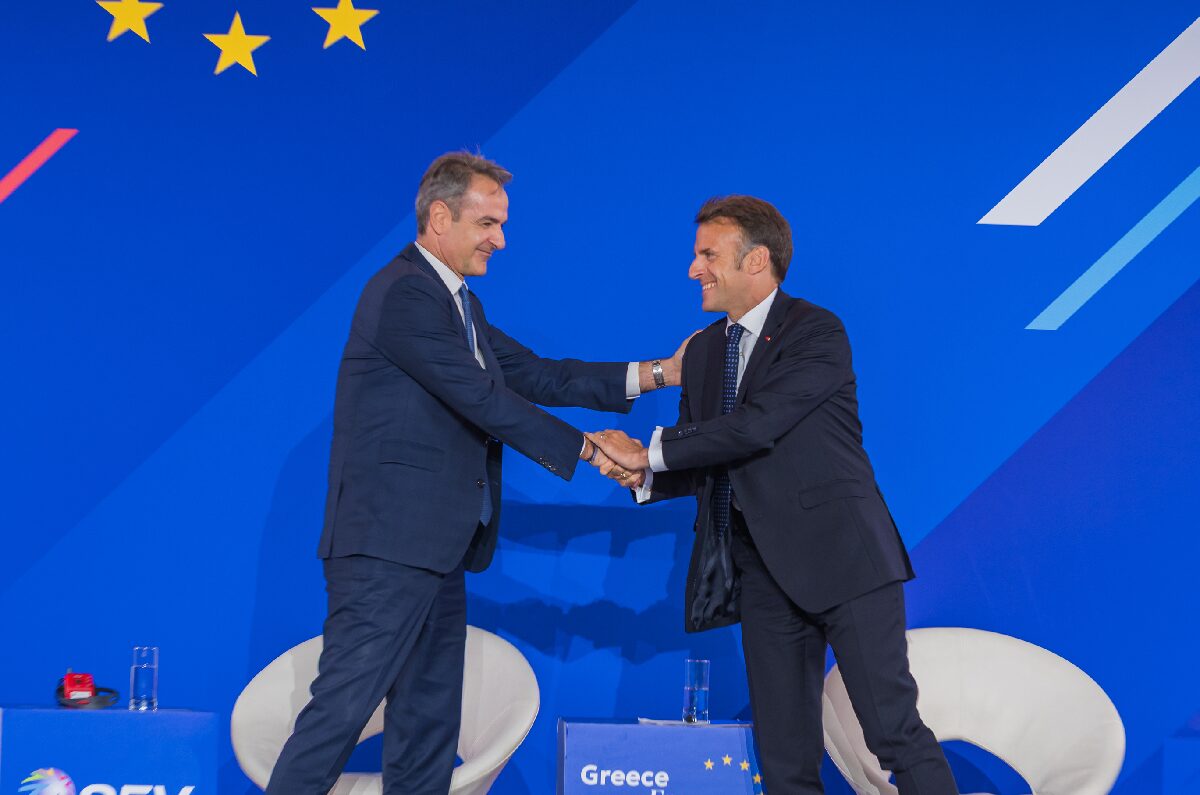
The proceedings of the Forum concluded with closing remarks by the Prime Minister of the Hellenic Republic, Mr. Kyriakos Mitsotakis, and the President of the French Republic, Mr. Emmanuel Macron, who underlined the importance of deepening Greek-French cooperation and its decisive role in strengthening European cohesion and strategic autonomy.
—
Gold Sponsors: METLEN Energy & Metals, BOTANICKEL, CENERGY Holdings, EDF Power Solutions, Eurobank, MERIDIAM, NAVAL Group, Olympia Group, Quest Holdings, THEON International
Sponsors: ALSTOM, ELPEN, FARIA Renewables, GROUPAMA Insurance, IMERYS, L’ORÉAL Groupe, MOTOR OIL, SANOFI, SCHNEIDER ELECTRIC, ΤΙΤΑΝ Group, VINCI Concessions, VINCI Highways, AKUO, VOLTALIA