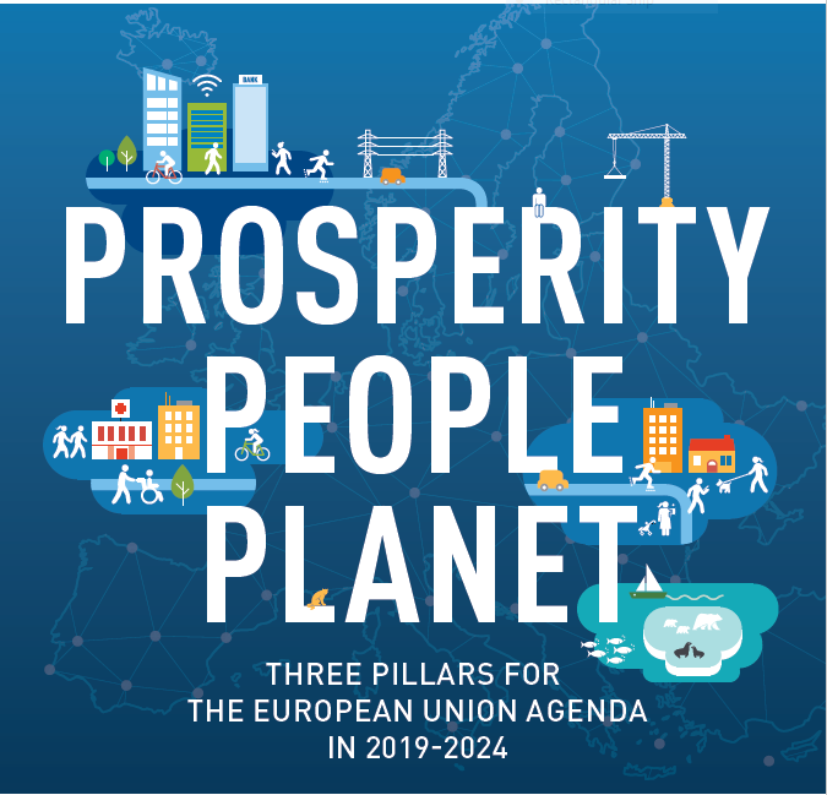
Prosperity, People, Planet: European business priorities for the new EU cycle

BusinessEurope and all its members propose their priorities for the European Union in a new political cycle in 2019-2024. Prosperity, people and the planet – these are the three pillars for a successful Union that should be a source of inspiration for future political decisions.

BusinessEurope President Pierre Gattaz said: “European entrepreneurship has a unique feature. It feels responsible for and cares about prosperity, people and the planet. Companies have a central role to play. Achieving environmental and social goals largely depends on their success: without profitable companies, no inclusive growth, no jobs, no technological solutions to protect the environment.”

European businesses identified 30 priority areas for action by the EU in the coming five years.

“The agenda for the EU for the next 5 years must bring about modern, forward-looking EU policies adapted to the global shifts of the 21st century. The world is on its way to a new geo-economic order. To strengthen European sovereignty, the EU must speak with one voice and row in the same direction. If we want to maintain our standard of living and be a credible example to the rest of the world, we must ensure the economic success of our continent,” Gattaz added.

Read our priorities here: www.euyourbusiness.eua

Sustainable Development


Sustainable Development

The principles of sustainable development are an integral part of responsible entrepreneurship, corporate strategy, effective business risk management, and decision-making processes. In 2008, the SEV Council for Sustainable Development (SEV BCSD) was established to promote sustainable development within the business community and more broadly across the economy and society. SEV BCSD supports businesses in understanding the value and growth opportunities associated with sustainable development and actively participates in public dialogue to advance policies that balance all three dimensions of sustainability, environmental, social, and economic.

SEV BCSD operates as a network for collective action and advocacy, advancing three strategic objectives:

  • Empowering businesses to integrate sustainable development as a driver of value creation, resilience, and competitiveness. Through studies, research, and reports, we identify and analyze business needs and document the impact of new policies and regulatory measures. We also implement awareness-raising and educational initiatives to help the business community better understand the opportunities and practical ways of integrating sustainable development into both strategic planning and implementation.
  • Strong institutional representation in public dialogue: As a dynamic interlocutor of the State on sustainability issues, we advocate for realistic policies that balance the different dimensions of sustainability while advancing business priorities.
  • Collaboration & Networking: We encourage the development of synergies within the business community and foster networking with other stakeholders. Our members benefit from our national, European, and international network, gaining access to the expertise and experience of some of the most pioneering business initiatives in sustainable development.

SEV BCSD develops its activities with a focus on the following priority areas:

  • Addressing climate change: Supporting businesses in adapting to climate targets and the transition to a low-carbon economy, while safeguarding the sustainability and competitiveness of Greek businesses.
  • Transition to the Circular Economy: Promoting the Circular Economy as a value-driven business model that is essential for addressing and mitigating the impacts of today’s multiple crises, including climate change, pressure on natural resources, and threats to supply chains.
  • Protection of nature & biodiversity: Encouraging business activity that operates in balance with the necessary protection of natural capital and with respect for the sustainable management of natural resources.
  • Modernization of environmental legislation: Shaping policies for an effective regulatory framework that ensures a level playing field and more efficient enforcement of environmental regulations.
  • Integration of ESG criteria: Promoting the integration of sustainable development principles into decision-making processes, holistic business risk management, and the exploration of new markets and opportunities, while highlighting the added value that meaningful disclosure of non-financial information across the three ESG pillars — Environment, Social, and Governance — creates for both society and businesses.
  • Advancing the Sustainable Development Goals (SDGs) within businesses: Promoting the Sustainable Development Goals as a common reference framework for the contribution of businesses to sustainable development.

Companies from almost every sector of the economy participate in the SEV Council for Sustainable Development (SEV BCSD), actively contributing to the promotion of sustainable development principles and sharing a common vision for its strategic and developmental role.

Any company that recognizes the value of sustainable development for both its strategic planning and day-to-day operations, and that actively embraces the core principles of responsible business conduct across the areas of environment, society, and governance, can join our network.

You can find more information on how to become a member and contribute to the Council’s initiatives on the Council’s website at www.sevbcsd.org.gr

CONTACT PERSON

Diana Georgakopoulou
General Manager,
SEV Business Council for Sustainable Development

Email me

CONTACT PERSON

Crystalie Bourcha
Senior Advisor,
SEV Business Council for Sustainable Development

Email me


Related

EU should rebalance trade and become climate neutral

European business presents its new energy and climate and trade strategies –

Today, BusinessEurope published its two new strategy papers on energy and climate policies and on trade policy, proposing adjustments to current EU policies.

BusinessEurope Director General Markus J. Beyrer said: “The European business community stands behind the EU ambition to achieve net-zero greenhouse gas emissions to achieve the goals of the Paris Agreement. Today businesses are making huge investments and are ready to engage with governments and society to reach this objective of climate neutrality. Whether climate neutrality is possible by around mid-century in order to limit global average temperature increases to 1.5°C will depend on meeting a set of crucial framework conditions and actions. This means Europe needs a comprehensive industrial strategy for investments, large-scale availability of affordable low-carbon energy, full participation of its citizens and a rapid convergence of global actions. In global trade today, we are confronted with protectionism, increasing uncertainty and mounting pressure on the multilateral trading system. That’s why European businesses want an EU trade strategy that is open, rules-based and better enforced. Our top priorities are rebalancing the EU relations with China and the US, promoting a reformed and more effective World Trade Organisation and pursuing ambitious trade and investment negotiations that restore the level playing field for European companies while allowing more people to benefit from trade.”

Please see a short video statement and read:

A trade strategy fit for the 21st century

European business views on a competitive energy & climate strategy

Climate conference COP23: We need progress and transparency

European business expects substantial progress to be made at the climate conference starting on Monday in Bonn (COP23). Under the Fijian Presidency, the United Nations Framework Convention on Climate Change conference will continue discussing the completion of the Rule Book for the implementation of the Paris climate agreement. This Rule Book includes the rules and processes needed to achieve the objectives of the Paris Agreement, such as how countries should communicate their efforts and how they will be held accountable for their commitments, how collective efforts will be reviewed every five years, and how to facilitate implementation and boost compliance. The conference will also seek to make significant preparations for the 2018 Facilitative Dialogue that will review the current state of action and potential areas for future action.

BusinessEurope Director General Markus J. Beyrer commented: “It is essential that governments take a major step forward for the completion of the Paris Rule Book. We need a clear signal that all countries are moving ahead in taking ambitious actions to mitigate greenhouse gases, as the European Union does. European business also expects transparency in the reporting requirements of countries. Only transparent action by all the major and emerging economies can combat climate change without distorting growth and competitiveness.”

Business and other stakeholders can provide significant input to the 2018 Facilitative Dialogue. BusinessEurope will be closely following the development of market-based approaches under Article 6 of the Paris Agreement, among other things.

“We hope that the open and consultative approach of the Fijian Presidency of COP23 sets a clear example and that we can expect a fully transparent process in Bonn with meetings open to all stakeholders. In particular, meetings discussing the establishment of market-based approaches under Article 6 of the Paris Agreement should use the vast market experience of the business and financial community”, said Beyrer.

EU Plastics Strategy – ambitious targets with a balanced approach

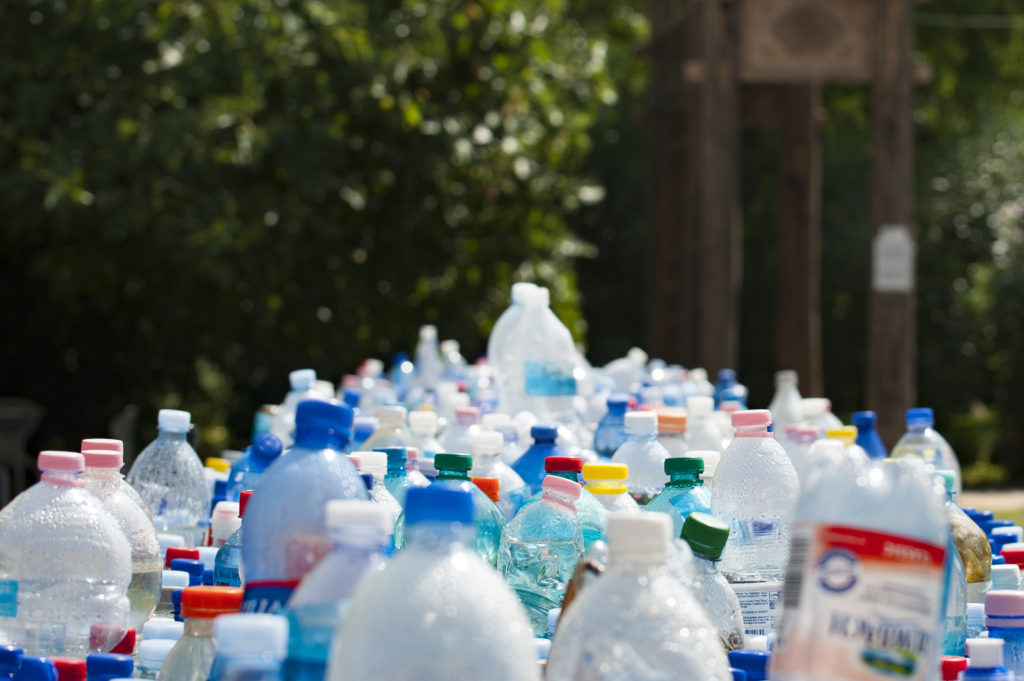
Today, the European Commission took an important step forward in the Circular Economy Action Plan with a publication of the Plastics Strategy. The Strategy settles an ambitious target – by 2030, all plastics packaging placed on the EU market should be reusable or recyclable in a cost-effective manner. More than half of plastics waste in general should be recyclable by 2030 while today it is less than 30%.

BusinessEurope Director General Markus J. Beyrer said: “European industry is fully committed to shifting to a more circular Europe, but the circular economy needs to make business sense. We welcome today’s Plastics Strategy, which is relatively balanced between environmental and economic considerations. We welcome the European Commission’s intention to look for voluntary pledges to boost recycled plastics rather than immediately jump to regulatory actions. We agree that any new EU measures should be in line with the Better Regulation principles, and that an impact assessment should be carried out when measures are likely to have a significant socio-economic impact.

However, we would like to see more clarity on the potential EU-wide fiscal measures as well as the proposed ‘private-led’ fund for financing investments for innovations and technologies. We support the Commission’s intention to first enter into a dialogue with stakeholders on these matters.”

Public event of SEV’s General Assembly 2023

“Fulfilling our Potential – Shaping our Future” #SEV4Growth

Public event of SEV’s General Assembly  |  Megaron, the Athens Concert Hall, Alexandra Trianti Hall  |  Tuesday, October 10th, 2023, 19:30 (ΕΕΤ)  

Discussion:

  • Mr. Kyriakos Mitsotakis, Prime Minister of the Hellenic Republic
  • Mr. Dimitri Papalexopoulos, Chairman of SEV

Moderation: Nicky Lyberaki, Journalist

The Green Economy and Sustainable Occupations of the Future

Article by Dimitris Vergados, Director of Business Issues, Public and Media Communication, SEV, at Greek Business File

The term ‘climate crisis’ has truly pervaded public dialogue recently, as it represents perhaps the most serious long-term threat on a planetary level. The experience of this past summer, with increasingly frequent reports about what is happening at the poles, the unprecedented droughts, fires and floods – and climate instability and environmental degradation in general – is one more sounding of the alarm. The need to do “whatever it takes” to make up for lost ground in response to the climate crisis, led Europe to adopt an ambitious sustainable growth agenda embodied in the “Green Deal”. The goal: to make Europe the first climate-neutral continent by 2050. Europe, with its soft power, aspires to drive the green transition worldwide, even though it is responsible for no more than 10% of global emissions. Greek entrepreneurship supports the Green Deal, recognises the significant emerging opportunities and stresses the need to get behind the transition. Interestingly, Greek industries reduced their carbon dioxide (CO2) emissions by 29% between 1990 and 2018, a rate that exceeds the overall decrease in emissions for the industrial sector in the EU (-22%) for the same period.

The development of a new green economy is the greatest challenge of our time
For SEV, developing a new green economy that is both competitive and sustainable is now imperative and constitutes the most serious challenge before us. The target for achieving climate neutrality by 2050 ushers in a new framework, setting equally ambitious goals for interrelated issues such as circular economy, energy sources, energy efficiency and biodiversity. In this new landscape taking shape all over the planet, businesses are being called upon to innovate and to meet new requirements and comply with new standards that are either set by their costumers/suppliers or imposed by the regulatory framework. This means investing in new products and new production processes, assuming the high risk of investing in research and development of new technologies and products while also seeking new markets.

The new green employment landscape: new challenges and opportunities
It goes without saying that these developments are also changing the employment landscape. According to SEV’s special report on this topic [available only in Greek], these changes will be quantitative, leading to an increase in jobs in certain sectors and a decrease in others, as well as qualitative, through the creation of new “green” occupations, the transformation of others and the addition of new responsibilities and tasks related to sustainability and environmental protection. The promotion of circular economy, the spread of electromobility, the renovation of the building stock and sustainable buildings, phasing out of lignite and expanded use of RES are key drivers for creating green jobs and occupations.

According to the SEV report, among green jobs we now witness new, entirely environment-related occupations emerging, such as:

  1. Anti-pollution Specialist
  2. Special Waste Management and Recycling Specialist (industrial waste, etc.)
  3. Recipient Water Bodies and Potable Water Quality Monitoring Supervisor
  4. Industrial Symbiosis Consultant on environmental issues
  5. Environmental Economist
  6. Environmental Audit and Certification Specialist
  7. Environmental Applications occupations
  8. Environmental Lawyer
  9. Renewable Energy Source Technologies Specialist
  10. Photovoltaic Energy Systems Specialist
  11. Environmental Protection Specialist
  12. Energy Savings Specialist
  13. Bioclimatic Design & Building Applications Specialist
  14. Wind Energy Systems Technician
  15. Environmental Protection – Construction Material Recycling Specialist
  16. Construction Engineer, emphasis on energy management
  17. Marketing and Sales of Energy-Saving Construction Products (Green Marketing)
  18. Bioclimatic Construction Architect
  19. Environmental Protection – Metal Product Recycling Specialist.

Nevertheless, the green transition will mainly impact and transform existing occupations, highlighting the need for workers with new, green skills. In addition, EuroFound (2019) studies estimate that more new jobs, albeit marginally, will be created in emerging green sectors than will be lost in sectors that undergo transformation because of a need to adapt to the new levels of environmental requirements. The resulting serious challenge does not relate so much to absolute employment levels as it does to ensuring the successful adaptation of enterprises and employees to this new economic reality. This adaptation is complicated by the triple divide (geographical, temporal, skills) that exists between the jobs being created and those being lost. Bridging this triple divide is a critical prerequisite for completing a fair and inclusive transition to an economy with low carbon dioxide emissions and efficient use of resources. Assisting occupational transitions through reskilling and upskilling of employees, encouraging geographic mobility and supporting the structural adjustment of the affected regions and sectors are key components of the desired solution.

In conclusion, a new “green” world is emerging, and it is our duty and responsibility to seize the opportunities for growth that arise so that businesses and workers can come to terms with the new reality and emerge stronger in the long term.

From waste management to circular economy – The road ahead

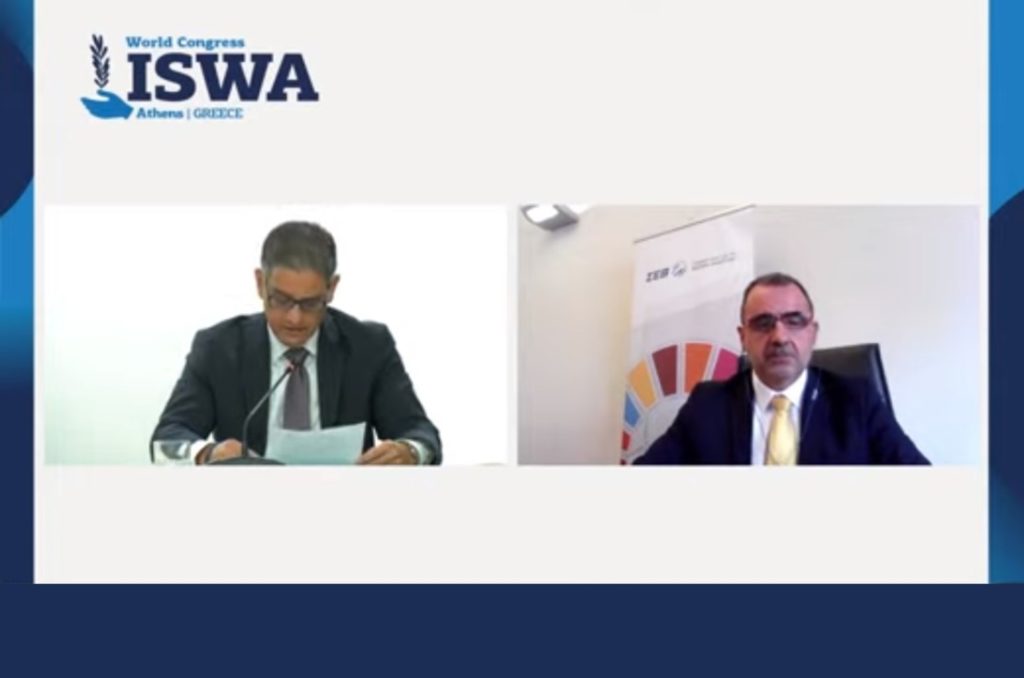
Mr Konstantinos Konstantinou, General Manager – SEV Business Council for Sustainable Development address at the 2021 International Solid Waste Association Congress

“Circular Economy stands as the biggest opportunity to transform production and consumption since the 1st Industrial Revolution.

We cannot afford to delay further a transition to a sustainable economy that will be inclusive for everyone and international in scope.

Businesses around the globe are already investing in decoupling growth from resource use, counter-balance natural resources depletion and reverse unsustainable production patterns but market and cultural barriers still stand as major holdbacks from exploiting their full potential.

Οur common road ahead should deploy wider synergies among policy makers, business and civil society to encourage a mentality shift towards responsible conduct, as well as to educate consumers on the basis of transparent and reliable information”.

You may read the full speech here.

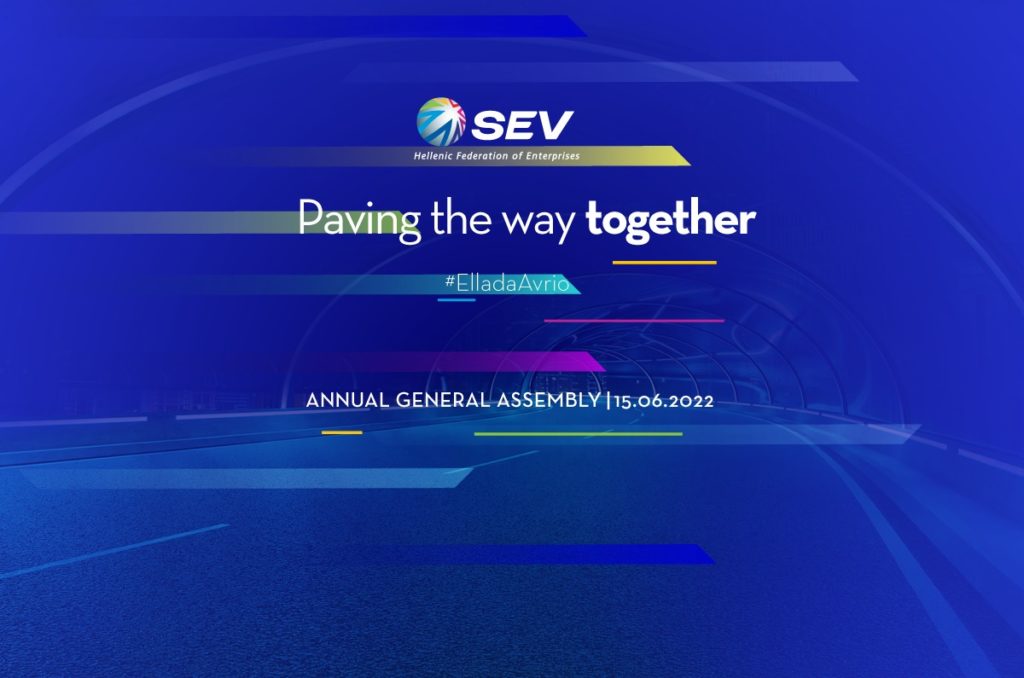
SEV General Assembly 2022

The Annual General Meeting of SEV Hellenic Federation of Enterprises, with the key message “Paving the way together” #ElladaAvrio, will take place on Wednesday, 15 June 2022 (10:00-13:30). This year’s meeting of SEV’s members will be held in person. During the second part of the General Meeting, the leader of the Opposition, Mr. Alexis Tsipras, will address the federation’s members.

The Open Event will follow, at 19:00 and will be held in a hybrid manner, both in person and online. H.E. the President of the Hellenic Republic Ms. Katerina Sakellaropoulou will honour the event with her presence. There will then be addresses by the Prime Minister Mr. Kyriakos Mitsotakis, and the Chairman of SEV, followed by a discussion.

The proceedings of the Open Event will be livestreamed. You may register to watch the event live here.

You may view the event’s agenda here.

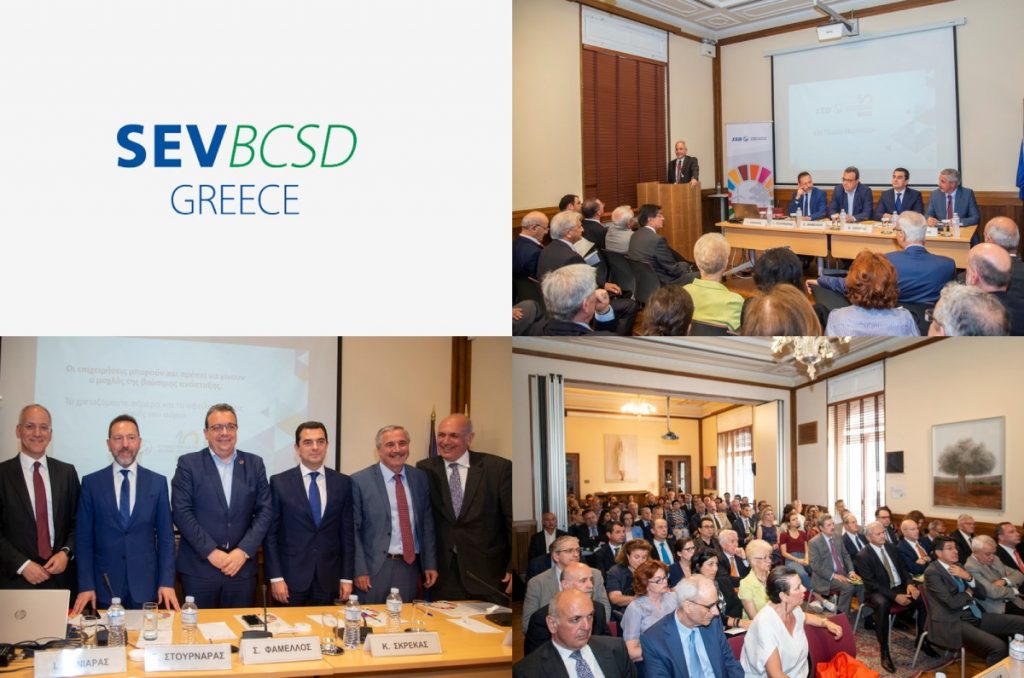
The SEV Business Council for Sustainable Development celebrates 10 years of action

Athens, 11 June 2019 – In an anniversary event held today at the premises of the Hellenic Federation of Enterprises (SEV), with the participation of politicians, businesses and academia and as keynote speaker the Governor of the Bank of Greece, Ioannis Stournaras, the SEV Business Council for Sustainable Development (SEVBCSD) presented the highlights of its decade-long work, all the while emphasizing the necessary steps towards achieving sustainable development in Greece.

SEVBCSD was founded on 11 November 2008 with the aim of promoting Sustainable Development as a modern framework for comprehensive economic, environmental and social development and representing, at the same time, businesses in the dialogue with the state and society, in general. Since its establishment, the Council’s aim has been to emphasize the competitive advantage gained by companies by integrating sustainable development into their strategy.

SEVBCSD has been a pioneer institution, introducing early in the country’s public debate issues such as Climate Change, Environmental Legislation, Circular Economy, and the UN 17 Sustainable Development Goals, responsibly informing businesses on the underlying challenges and opportunities. The progress of Greek businesses during recent years has been significant. By contributing to reducing greenhouse gas emissions, building infrastructure for circular economy, recycling and recovering raw materials, businesses have demonstrated not only that they can but also that they should be a key driver in sustainable development. Nowadays, the aforementioned issues are constantly drawing governments’ but also financial institutions’ attention as a tool for assessing investment, creating new potential and expectations for the fulfillment of the long-term commitments.

SEVBCSD is a partner of the World Business Council for Sustainable Development’s (WBCSD) Global Network, an alliance of more than 60 CEO-led business organizations worldwide. The Network, encompassing some 5,000 companies, is united by a shared commitment to provide business leadership for sustainable development in their respective countries and regions.

Mr. Ioannis Stournaras, who, in the context of the event, addressed the above critical issues, stated: “Current circumstances are particularly important in the light of Climate Change, as appropriate policy responses delay, leading to a climate crisis. In this context, four aspects are emerging as key prerequisites for achieving sustainable growth: circular economy, energy transformation, environmental protection and the creation of value for society”.

Mr. Socratis Fammelos, Deputy Minister for the Environment, Energy and Climate Change, stressed: “In just 4.5 years we have achieved very important reforms, proving that the “contradiction” between environmental protection and the attraction of investment is false. Greece is no longer Europe’s “black sheep” when it comes to environmental issues. Circular economy is now at the heart of our country’s Development Strategy and we have created  conditions for our country to have more freedom of action and essential conditions for prosperity and progress”.

Mr. Kostas Skrekas, Nea Dimokratia MP, former Minister of Development and Competitiveness and Nea Dimokratia shadow cabinet member on energy issues, said: “Our country needs to move forward with a planning encompassing both welfare and infrastructure. Our policy should focus on two directions: on the one hand, eliminate  the causes of Climate Change, by adopting measures reducing carbon dioxide emissions in the production process and in the production of electricity, both domestically and in transportations; at the same time, mitigate the effects of Climate Change, for example through flood prevention measures. Our country has all the potential but bold reforms and accelerating moves towards Sustainable Development are required.”

Mr. Yiannis Maniatis KINAL MP, former Deputy Minister of the Environment, stated: “The path towards Sustainable Development requires trust in citizens and investors alike. It also requires transparency, accountability and healthy competition by taking advantage of new technologies. Environmental legislation must ensure a balance between accelerating and simplifying permission granting processes, but also environmental protection. Finally, a non-phobic State that can work closely with the private sector through certified private scientists is also needed.”

During the event, the Founding President of SEVBCSD, Mr. Efthimios O. Vidalis, who was awarded the title of Honorary President as a recognition of his longstanding contribution, stated: “I would like to thank the General Assembly for bestowing upon methe title of the Honorary President of our Council, I am exceptionally honored. I interpret this recognition as a reward for the collective effort that we launched back in the autumn of 2008 with the aim of informing and raising awareness of both business and society in addressing and resolving the critical challenges of Sustainable Development. I am really delighted that the Council is continuing on this path and improving the process of social dialogue, at a time when society and businesses understand the need for Sustainable Development, creating better prospects for future generations.”

In his statement, Mr. Yiannis Paniaras, President of SEVBCSD, stressed: “Sustainable Development requires a balanced approach based on three pillars:  economy, environment and society. In the long run, any development effort that ignores one of these three pillars is doomed to fail. As SEVBCSD, we will continue to encourage and represent in the public dialogue the enterprises that want, can and must support the effort to achieve the goal of Sustainable Development in our country. We need it as a generation today and we owe it to the generations of tomorrow.”

Mr Peter. Bakker, President and CEO of WBCSD stated: “The Sustainable Development Goals and the Paris Climate Agreement signal the need for a deep change in the way our economies work, and in the way our energy, mobility, urbanization, food and social systems contribute to planetary and societal well-being. WBCSD advocates that business has a leading role to play as the world embarks upon this vital journey. In fact, forward-looking companies are not only integrating sustainability at the core of their strategy, decision-making, and disclosures; as long-standing masters of innovation, they are also ideally positioned to become the implementation partner of choice to capture opportunities across systems change. In this effort, we are proud to count on SEV BCSD Greece – a steadfast partner within our Global Network of partner organizations for the last decade in our shared commitment to provide business leadership for sustainable development, in addition to being an effective amplifier of the business voice around the need to scale up solutions. Congratulations on this important anniversary, and long life to its strife in making more sustainable companies more successful in Greece and beyond.”

More information:
Konstantinos Konstantinou, General Manager, SEVBCSD
kkonstantinou@sevbcsd.org.gr