Greece and the Industry 4.0 intelligent automations
Article by Alex Nikolaidis, Associate Advisor, Sector of Industry, Development, Networks & Regional Policy, SEV, at Business File
Demand for intelligent industrial automations in Greece is increasing during the last years. Several Greek manufacturing companies, mainly in the sectors of food industry and metal constructions, have made progress in integrating Robotic Process Automation (RPA) and intelligent systems into production process, inventory management, preventive maintenance, invoice processing, etc., gaining know-how from international best practices.
However, domestic industry has the potential to make further progress, given the automation / digitalization levels of more mature European and international markets. According to the International Federation of Robotics (EFR), in 2016 Greece was ranked 36th in 44 countries regarding the robot density in the manufacturing industry (17 robots / 10,000 employees in industry, although the actual number might be much lower due to re-exports), lagging Portugal (58), Hungary (57), Poland (32), Israel (31) and Turkey (23). Since then, we estimate that the density index of Greece is improved, since several investments in robotic systems and smart factories were made, but not to an extent that would enable our country to converge on other European countries.
Competitive advantages
The development of a smart factory, that integrates industrial automations and digital technologies, includes benefits like better quality management (lower cost of control mechanisms by 7-12%), faster prototyping procedures up to 30%, focus on preventive maintenance (increased production time up to 60%, reduced maintenance costs by 5-10%), increased availability of raw materials by 20-30%, increased productivity of assets by 10-20%, improved quality by 10-35%, shorter changeover by 10-20% and lower inventory volume by 15-25%. Overall, production facilities become more efficient, since repetitive tasks are conducted with high precision and speed, while enterprises are more agile, adjusting timely their production volume to the fluctuations of demand.
Transformation of jobs
It’s more precise to say that the disruptive technologies of the 4th Industrial Revolution, intelligent automations included, will contribute to the transformation of jobs (and not actually loss). SEV foresees that the changes will focus on augmenting human tasks with intelligent automations. Also, we should have in mind that the integration of intelligent systems in manufacturing may contribute to the emergence of new professions and job opportunities. For instance, investments in robots will surely increase demand for operators and engineers of robotic systems, chief robotics officers, technicians for augmented reality systems, etc. In this respect, enterprises have to upskill/reskill their workforce.
Greek SMEs and Robots
SMEs have a lot to benefit from Industry 4.0 automations. We expect that funding will be widely available from 2022 onwards. Indicatively, “Greece 2.0” plan will prioritize the financing of SMEs through subsidies of approximately €370 mn. for digital transformation actions (electronic payments, telework, digital office, etc.). Also, it will provide €75 mn. to manufacturing SMEs for investments in smart manufacturing and AI technologies. The new Development Law will prioritize digital transition, providing subsidies for investments in digital and technological transformation, the use of “Industry 4.0” technologies, robotics and AI, and the upgrade of relevant skills. Similarly, the new “Digital Transformation” program of NSRF 2021-2027 will include horizontal actions regarding the stimulation of investments of SMEs in innovative technologies, their take-up in all sectors of the economy, the development of digital skills, etc.
In search of greater economic policy making credibility – SEV’s monthly economic bulletin
Transforming Tradition into Competitiveness and Innovation
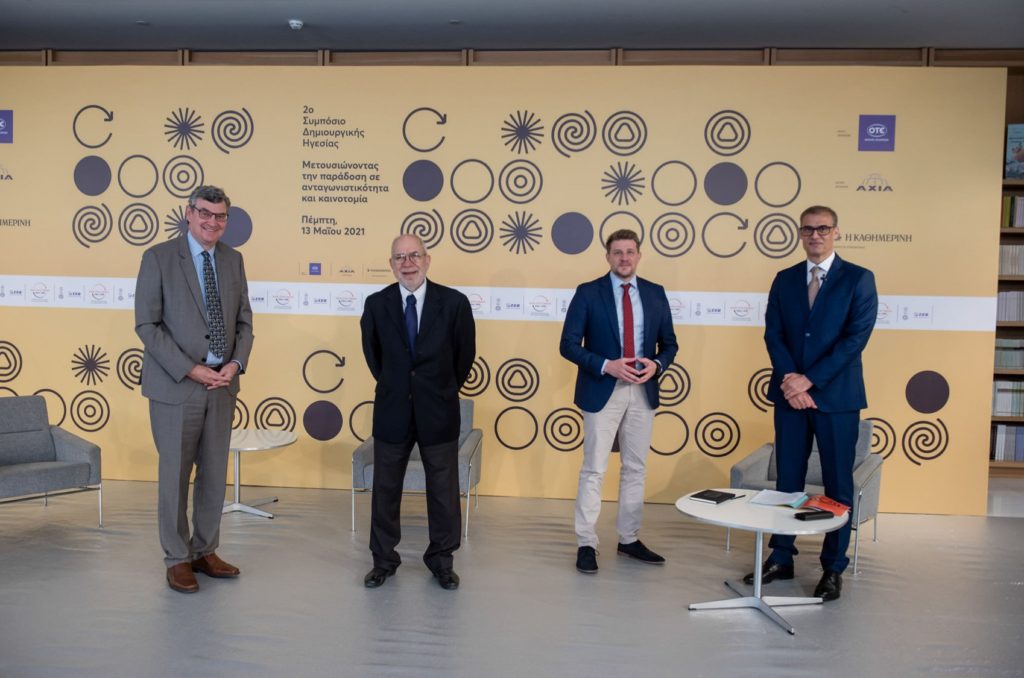
The co-existence of tradition and innovation at the heart of the 2nd Annual Symposium of the SEV Center of Excellence in Creative Leadership
Stimulating discussions, distinguished speakers and high participation were the elements of the 2nd all-day Symposium in Creative Leadership that was rolled out in hybrid form and broadcast live from the Lighthouse of the Stavros Niarchos Foundation Cultural Center on May 13.
The event was themed “Transforming Tradition into Competitiveness and Innovation” and organized in the context of the “Learning Alliance” in cooperation with Alba Graduate Business School, The American College of Greece. The event coincided with the third anniversary of the Center’s operation and featured a wide selection of Greek organizational examples of transforming tradition into creativity and innovation.
In the total of seven sessions that took place, top executives from Greek enterprises, which have left an impressive mark both domestically and abroad, analyzed the history and vision of the enterprises they are in charge of and shared their perspective and experience on the power and inspiration that entrepreneurship can draw from tradition in combination with creativity and innovation.
The Symposium opened with welcome remarks by the General Director of SEV, Alexandros Chatzopoulos, who —commenting on creative leadership— said: “One of the greatest prerequisites in order to upgrade the country, and not just the economy, is the continuous and lifelong quality learning, as well as the upskilling of people, which, in our days, encompasses all generations regardless. From transitioning to sustainable growth, which is not only a title but demands consistent work and changes on the part of the enterprises, to technological developments that are constantly evolving, creative leadership, that is our ability to change, to create and to innovate, is the thing that will give us the possibility to reposition ourselves in a multi-faceted and highly competitive world.”
In his remarks, Chairman of the Alba Board of Directors, Stelios Argyros, speaking about this year’s Symposium, commented among others: “It may sound contradictory to discuss tradition at an age where so many technological and entrepreneurial disruptions take place, however tradition and creative leadership and the value advantage of excellence mesh/blend in the best possible way in order for us to create innovation and competitiveness. What we are trying to convey to the business world is the need to identify tradition with creative leadership and the content of values.”
Speaking on the value of lifelong learning, the President of The American College of Greece, Dr. David G. Horner, said: “We believe that education must play a key role in equipping individuals, organizations, and, ultimately, societies, with the abilities to adapt, to reimagine, to reinvent themselves.”
During the Symposium’s first session themed: “Organizational tradition as an enduring relationship” coordinated by the Director of the SEV Center of Excellence in Creative Leadership and Professor of Organizational Behavior at the Alba Graduate Business School, Dr. Charalampos Mainemelis, the Vice President of ION S.A., Mr. Efstathios Loizos, and Marketing Director of Papoutsanis S.A., Ms. Eirini Chatziioakeimidou, discussed the role of creativity and innovation in the evolution of iconic brands. The two speakers agreed that the successful maintenance of the enduring relation between iconic products and consumers is built on trust, which in turn relies on the consistency and effort of enterprises to remain relevant without losing their authentic elements and values.
In the session that followed themed “Research and new knowledge”, Director of Research and Development of Apivita S.A., Dr. Konstantinos Gardikis and Mr. Yannis Mandalas, CEO at Mediterra SA, and the Chios Mastiha Research Center, exchanged views of the role of research in the evolution of traditional production techniques and the transformation of traditional raw materials into innovative forms of new products. Moreover, they discussed how the research of tradition can create new forms of knowledge that allow in turn enterprises to leverage the development of a distinct identity and calibrate their competitive depth.
The third discussion with the topic “Greek tradition as a competitive advantage” was coordinated by Ms. Aggeliki Karavasili, Research Fellow of the SEV Center of Excellence in Creative Leadership and Alba Graduate Business School. The discussion panel consisted of the following guests: Ms. Afrodite Florou, co-founder of Anassa Organics, Head of Security and Front Desk Department at the Museum of Cycladic Art, Ms. Barbara Karpodini, and the Marketing Director of Grecotel S.A., Mr. Yannis Tsichlis. The speakers highlighted the value of creativity in the promotion and leveraging of cultural works, natural resources and other timeless elements of the Greek tradition, as well as the importance of showcasing the Greek tradition as a complex nexus of experiences and meaning.
Professor Charalampos Mainemelis took once again the co-ordinator’s seat for the fourth discussion, themed “Tradition as an entrepreneurial reorientation” featuring guest speakers Messrs. Vasilios Papagiannakos, Winemaker and Owner of the Papagiannakos Winery, and Zafeiris Trikalinos, Owner of Trikalinos Co. The two speakers discussed the dual role of creative leadership in maintaining and revisiting tradition, as well as the importance of bold leadership decisions in the re-orientation of entrepreneurial tradition towards new, sustainable and competitive horizons.
Alba Dean and Professor of International Business and Strategy at Alba Graduate Business School, Konstantinos Axarloglou, co-ordinated the following discussion, themed “The long tradition of Greek entrepreneurship.” The panel discussion featured Director for Employment and Labour Market Affairs, Mr. Christos Ioannou, Sustainability Director of ELVAL S.A., Mr. Ioannis Koufopanos, CEO of M.G. Chryssafidis SA ., Mr. Alexandros Makridis, and the Director of Group Innovation and Technology and Member of the Executive Committee at TITAN Cement Group, Mr. Fokion Tasoulas. The speakers referred to the decisive contribution that the organization’s value tradition makes in the empowerment of its distinct identity. They also analyzed the traditional characteristics and new challenges of Greek entrepreneurship.
Director for Employment and Labour Market Affairs, Mr. Christos Ioannou, said: “We are here for the second year and are trying to offer answers together with the market protagonists and enterprises – together we can profile the production history of Greece in order to have imitators. Ιt is important to support the novel entrepreneurial tradition as it is the one that has created growth.”
The next session focused on “a Greek case study of creative tradition since 1879,” namely Boutari Wines. Professor Charalampos Mainemelis welcomed Dr. Yiannis Vogiatzis, General Manager and Chief Oenologist, Mr. Constantine S. Boutari, President and CEO, and Ms. Marina Boutari, Commercial Director of Boutari Wineries. The speakers discussed in depth the role of research and development in the promotion of indigenous grape varieties and the connecting link between tradition, locality and global orientation. As the speakers highlighted, the company insisted systematically on the research for the development of qualities that are acceptable by Greek and foreign visitors, incorporating tradition in the new trends, and leveraging tourism as an alternative means to exports.
In the seventh and last session, titled “Tradition as creative revival”, Mrs. Lydia Vousvouni, Head of Design at Zeus + Δione and Mr. Alexandros Efklidis, Theatrologist, Director and Artistic Director of the Alternative Stage of the Greek National Opera, discussed with the co-ordinator, Professor Mainemelis, about creative ways of refreshing and reexpressing tradition. During the discussion, the speakers presented their experiences related to reworking elements of the past with fresh eyes and then incorporating them into what is new.
WATCH THE FULL 2ND SYMPOSIUM OF THE SEV CENTER OF EXCELLENCE IN CREATIVE LEADERSHIP
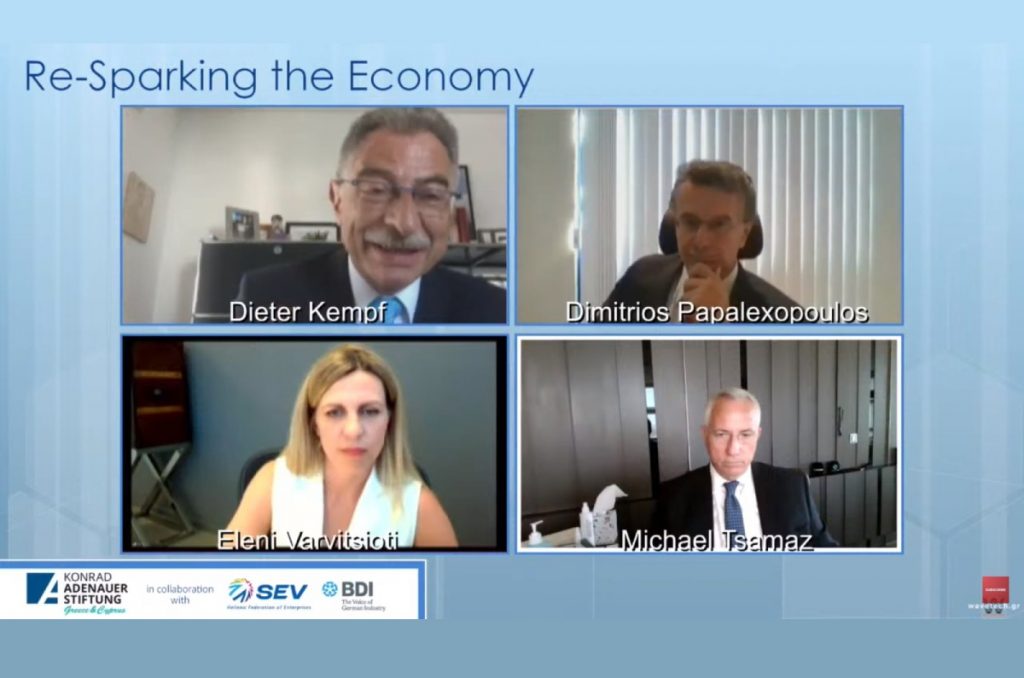
E-discussion between SEV Chairman D. Papalexopoulos, and BDI President D. Kempf
The digital event on re-sparking the economy after COVID19 was organized by the Konrad Adenauer Stiftung (KAS) for Greece and Cyprus, in cooperation with SEV and BDI on June 25th. SEV – Hellenic Federation of Enterprises Chairman, Mr. Dimitris Papalexopoulos, and BDI President, Dr. Dieter Kempf, exchanged views on the growth challenges and the prospects for a V-shaped recovery in Europe and Greece. They were joined by Mr. Michael Tsamaz, Managing Director & CEO, OTE Group, and Mr. Henri-Giscard Bohnet, Director of KAS for Greece and Cyprus. The discussion was moderated by Mrs. Eleni Varvitsioti, Journalist.
The discussion focused on the way that the business communities of Greece and Germany responded to unprecedented circumstances, on the national and European instruments that have proved most effective in managing the COVID19 crisis, as well as on the policy priorities for the coming period.
Mr. Papalexopoulos underlined the need to build closer links between businesses and society, and emphasized the importance of increasing industry’s share in GDP, through more investments and speeding up the pace of reforms.
He also noted that Greece’s response to the health emergency demonstrated the very good reflexes of the public administration and citizens alike, and helped improve the country’s collective confidence creating the conditions for the country’s positive rebranding and re-alignment on the global stage. He also underlined the importance of a united Europe, and Greece’s commitment to the European vision, especially at a time our continent faced important challenges.
Mr. Papalexopoulos added that the health crisis is forcing us to think differently and to act intelligently. Greece, he said, is called to rise to the challenges of the post-Covid-19 world and to restart its economy, which despite significant progress, appears weaker than its European counterparts’ because of the long financial crisis. He stressed the need for greater consistency and speed of reforms as well as a socially responsible and effective management of EU Recovery funds.
The main priorities for a dynamic restart of the Greek economy stem from the need to strengthen its productive base through increased investment in infrastructure, with particular emphasis on digital transformation, the green and circular economy, and improving skills throughout the workforce at a time when also international supply chains are being redesigned. Mr. Papalexopoulos also highlighted the emerging investment opportunities in many key productive sectors of the Greek economy including the agro-food industry, pharmaceuticals, energy efficiency, waste management and logistics, and the growth impetus offered by the country’s valuable human capital.
Dr. Kempf noted that the European supply chains need to be redesigned taking into consideration not just economic costs but sovereignty costs as well, and stressed that the EU is the only way for Europe to remain an important global economic actor. He remarked that the current health crisis is very different from the financial crisis of 2010, and therefore the European policy response cannot be based on the same arguments as a decade ago. He underlined the need for a “Clever Green Deal”: an integrated strategy for green growth and post-COVID recovery, including substantial encouragement to SMEs for investment in digitization. Dr. Kempf warned that Europeans should remain alert to the virus, otherwise the current euphoria of dealing with the first wave may end up being self-destructive.
Click here to watch the full discussion
Click here for more information on the event
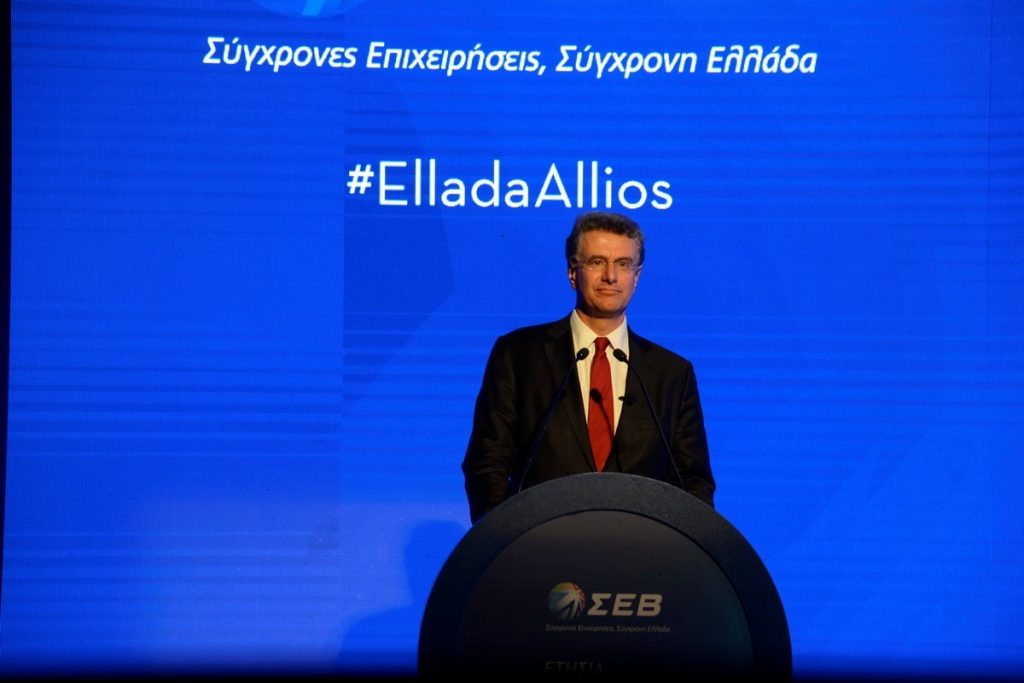
New SEV Chairman, Dimitri Papalexopoulos speech at SEV Annual General Meeting
Prime Minister,
Dear members of the Board of Directors,
Dear Friends,
I welcome you, in turn, to the open event that is traditionally held following the SEV General Meeting. I’m sorry that conditions are keeping us apart, and this opportunity for us to meet adds to the endless list of online events in recent months.
I would like to start by thanking the members of SEV for putting their trust in me and in the new Chair of the Executive Committee, Efthymios Vidalis. We will do everything in our power to prove worthy of this honor.
And also worthy of succeeding Thodoros Fessas, who worked tirelessly for the Federation and leaves behind a strong and dynamic organization that is looking to the future.
As the Chairman of our Federation, he managed situations under adverse conditions, while at the same time strengthening the organization and its voice in the public debate.
With ethos, hard work and common sense, he succeeded in collaborating with everyone. He did important work, defending pragmatism and participating actively and constructively in the social debate, honoring his role as the leader of an institutional social partner.
During his chairmanship, SEV grew. It gained 340 new members, flourished throughout the Regions of Greece, and put great emphasis on the openness of Greek enterprises. Today, the employees at companies that are direct members of SEV number some 200,000 [and many more if we include affiliates of SEV members].
Thodoros, on behalf of everyone, I thank you for all of this and much more. It would be a great thing if Greece had more leaders who understood their role in public life as you do.
***
My address today will focus on five key topics:
First, on how we perceive SEV’s role.
Second, on the need for enterprises to get closer to society.
Third, on the importance of industry’s increased significance in the economy as a whole.
Fourth, on the three primary horizontal priorities we need to embrace: the digital revolution, enhancing skills in the labor market, and green growth.
And last but not least, on managing the crisis caused by the pandemic.
1: SEV’s twofold role
I’ll start with how we perceive SEV’s role.
The Hellenic Federation of Enterprises (SEV) has its roots in industry. It strives to effectively represent manufacturing and the importance of manufacturing for the Greek economy.
What’s more, the strengthening of manufacturing in Greece is an extremely critical and pressing issue, which I will come back to shortly.
In this effort, SEV incorporates the whole multidimensional ecosystem of enterprises that comprise industry: producers and providers of knowledge, enterprises large and small, in the center but also in the periphery.
At the same time, in recent years we have made a conscious effort to evolve into a voice for all diligent competitive entrepreneurship in Greece.
Not just because many of the issues we deal with, such as taxation, labor issues, justice, training, pension policy, the regulatory environment or funding, are horizontal and concern all the sectors of the economy.
But mainly so that we can gain a common and strong voice for all of us who believe that diligent entrepreneurship that goes hand in hand with the needs of society is perhaps the most important component of long-term growth.
This is why, today, many of the most successful enterprises in all the sectors of the economy have responded to our call and become active members.
With their assistance, we are working to upgrade the whole economy.
We have not earned our right to be heard, to contribute creatively to shaping public policies and to develop new enterprises on the basis of our name or our formal title of Social Partner.
We have earned it by creating solid proposals on every issue, as well as through our efforts to transcend the short-sighted thinking of union representation.
We have earned it by striking a balance between the concerns and interests of our members, on the one hand, and the need for changes. Changes that – even if they seem difficult or unpopular today – we defend when we believe they contribute to the progress of enterprises and society as a whole.
To the degree that we pursue a broader role – that of first among equal representatives of organized entrepreneurship in our country – we have to earn it every day through our actions.
In the end, this twofold nature of SEV – representation of industry and of entrepreneurship in general – is not a dilemma.
We embrace both roles.
And we work to serve them at the same time. Of course, we can do better, but we are on the right path. The significant increase in our members – from all sectors, including industry – confirms this.
2: Enterprises and society
The second topic I would like to address is the relationship between enterprises and society.
Moving forward, we believe that building a new relationship of trust between enterprises and society is one of the key goals that we must pursue.
It is a fact that society often does not embrace us – does not trust entrepreneurship. It sees entrepreneurship as something distant. And we have to admit that this suspicion is, to some extent, understandable; it isn’t just the result of populism.
The economy we are striving in is small, with a tradition of introversion and over-regulation. It is an economy in which honesty is rarely rewarded and failure to meet one’s obligations is rarely punished. As a result, there have been distortions of competition, as well as cynical practices that cause many people to understandably question enterprises’ contribution to the common good.
Today, the way enterprises have responded to social needs, in combination with the maturity and awareness of our society, has created the conditions for throwing off the burden of the past.
At SEV, we believe it is our responsibility to reverse this perception. Strengthening of the relationship between enterprises and society depends first and foremost on us, the enterprises. Starting with a willingness to take a hard look at ourselves and make improvements.
The more we evolve for the better, the stronger our relationship with society will become. The more we invest in meritocracy, training and development of our employees, in open competition, in innovation, in sustainable development, in good governance and corporate social responsibility, the more we can reduce this distance. And the more entrepreneurship can legitimately ask for the state’s assistance in pursuing growth.
A critical mass of enterprises has embraced this need. And SEV will strengthen this trend through solid proposals for reforms, provision of knowledge, promotion of good practices that exist in our country and are gradually becoming more widespread.
The state, in turn, can contribute to the liberation of the economy’s productive forces. Creating a clear and serious regulatory framework that supports us. Avoiding the role of entrepreneur, in which it has repeatedly failed. Promoting the much-discussed but necessary reforms in licensing, spatial planning, the speed with which the courts issue rulings, reduction of red tape, tax legislation. Reducing, as a priority, the tax burden of labor (ideally in a way that encourages young people who have gone abroad to return home). Supporting innovation and effective linking of education with the needs of the modern market. Helping to make entrepreneurship fashionable among young people; putting it in our schools; marrying it with our educational system.
Prime Minister,
Enterprises see in you someone who sincerely believes that entrepreneurship is part of the solution for the future of our country. We all agree that in countries where society, enterprises and the state come closer together, there are significant benefits for everyone. SEV will be the first to contribute in this direction, and it hopes for a positive response.
3: Shift towards manufacturing
The third topic I would like to discuss today is the emphasis we plan to put on the development of industry.
Since the mid-1980s, industry’s added value for the economy has fallen. In part, this was the result of unavoidable international trends. But it was also the result of incorrect choices. Think back to the unbridled consumerism and erosion of production at the beginning of the century.
Industry’s current direct participation in GDP is estimated at about 10%. But this percentage undervalues its contribution.
According to IOBE data (2018), nearly 1/3 of GDP and employment derives from the direct, indirect or induced impact of manufacturing.
Manufacturing’s total multiplier in GDP is 2.8, and 3.5 in employment, benefiting services and commerce and creating a vital ecosystem of SMEs.
Manufacturing accounts for 44% of total exports, pays salaries that are on average significantly higher than in the rest of the economy, and contributes more than its share to state revenues.
So, manufacturing’s contribution to GDP has multiplying benefits.
It is thus no coincidence that the EU’s goal is to increase manufacturing’s participation to 20% on the European level.
SEV’s primary goal is to increase industry’s contribution to GDP from 10% to 15% over ten years.
If we achieve this goal, we estimate that, gradually, we will see the creation of 550,000 new, well-paid and stable jobs in our country.
To understand of the magnitude of the shortfall, as well as the magnitude of the opportunity, we need only look at what is happening in other European countries that are quite similar to Greece, such as Portugal.
Portugal exports €53 billion in industrial products, compared to about €30 billion in our country.
Due to this industrial openness, 17% of employees work for industrial enterprises, compared to 9% in Greece. SMEs benefit similarly, contributing 57% of exports, compared to 45% in Greece.
This may seem like an ambitious goal, but the circumstances are better than they have been in many years.
It helps that the EU is moving in the same direction. That the geopolitical changes are creating opportunities for Europe’s supply chains to move closer to home. That access to technology is easier than ever before. That Europe is providing funding that can impart momentum. That the long years of the crisis (in combination with the difficult circumstances for our tourism sector) have created broad agreement on the issue.
There are sectors in which, as a country, we have a comparative advantage, and we can develop these sectors. Metals, food, pharmaceutical industry, green energy, mineral wealth, shipping and some high-tech sectors are just a few.
We can certainly do better. What do we need in order to achieve this?
This is a broader debate that has to be carried out immediately. However, we would include the following as key ingredients for success:
– Continuation and acceleration of the much-discussed reforms (which I mentioned earlier), which concern mainly removing obstacles that (all) enterprises have to deal with.
– Drawing up of a clearly defined industrial policy, in line with that of the EU.
– Securing competitive energy prices.
– Systematic bolstering of our ability to innovate.
– Earmarking of adequate funding for investment in necessary infrastructure – especially digital, energy, circular economy and logistics infrastructure.
– And finally, our alignment behind certain critical imperatives of our time: the digital revolution, the necessary skills for our labor force, and green growth.
Prime Minister,
Global economic and geopolitical developments have shown the importance of domestic industry and a modern industrial policy. On the EU level, the issue is already being approached pragmatically and with a sense of urgency. The corresponding debate in Greece has been late in coming. SEV is prepared to participate in and give all its support to the collective effort required to achieve the goal.
4: Three horizontal priorities
I would like to make a separate and brief reference to the horizontal priorities I just mentioned: the digital revolution, the necessary skills for our labor force, and green growth.
each of the three holds risks and opportunities for Greece. SEV has developed multifaceted action on each of the three. We will commit ourselves further to each of the three.
We support and strengthen the upgrading of Greek enterprises’ digital capabilities, so that they can close the digital gap between Greece and most European countries.
The coronavirus crisis gave us an unexpected push in this direction. A major step forward was taken with digitization reforms in the public sector, and the government and all those who contributed to this deserve our congratulations. Now we have an opportunity to pick up the pace, all together.We believe in the need for substantial upgrading of the skills of our current and future human resources – of young people.
We intend to take additional initiatives to support the linking of education with the labor market, in the hope that the time is finally ripe and there is consensus on a major step forward on this critical issue.
We are investing in strengthening our collective capability to innovate, as a key condition for growth with well-paid jobs. Greece has excellent scientists, at home and abroad. If we succeed in bringing them closer to our enterprises, to the market’s applied innovation, we all stand to gain. And at the same time we will support start-up enterprises that have enormous potential.
We actively support European and national initiatives for green growth, circular economy and energy transformation. At the same time, of course, ensuring that the competitiveness of industry is protected from potential unfair competition from outside the EU. As a country, we have comparative advantages on which we can build.
These challenges have become a focal point throughout the world, as well as in Greece. The changes entailed are momentous and the pace of the changes is very rapid. We need to see everything we do in the light of responding to these challenges.
Prime Minister,
You have promoted these priorities as a government. However, we need to go farther faster. We will be your allies in promoting these priorities with determination.
5: Coronavirus and management of the crisis
If we had held our General Meeting a few months ago, my speech would end about here. These, I would say, are the challenges we have before us. I would speak with cautious optimism.
The coronavirus crisis changed everything. 2020, at the very least, will be a very difficult year.
Many enterprises are once again concerned about survival. The 30-year-olds who have experienced two successive crises are worried about their careers. Expectations were shattered at the most critical moment: just when we believed we had left the economic crisis behind and the time had come for us to surge ahead.
The government – whose successful management of the health crisis so far has been acknowledged by everyone – has some difficult decisions to make about how to mitigate the impact of the economic crisis: with what priorities and what resources. Our proposals are along the following lines:
Responding to the pandemic and protecting human life are still the first priority. We continue to comply with the measures for protecting the health of our employees, our customers, our suppliers. At the same time, we support the national effort, beyond our business footprint, through donations of equipment and logistical support [our members have already donated tens of millions].
Second, we believe that the economic measures, beyond the protection of vulnerable groups, must support jobs and production (of products and services), to safeguard as much as possible the fragile health of our country’s productive fabric. The initiatives the government has already taken are in the right direction.
Third, responding to the crisis must not distract us from our strategic goals or serve as an alibi for avoiding the necessary reforms, which have to move forward more quickly.
Fourth, the coming European funds give us a new opportunity to break free of the history of missed opportunities and wastefulness of the past. Strengthening investments in critical infrastructure, as well as private productive investments, help in the long term and strategically.
I’d like to emphasise something at this point. Private productive investments weathered the crisis. Indicatively, from 2007 to 2017, investments in industry fell by 5%, while GDP shrunk by 25%.
However, this is not enough. The implementation of domestic investments, along with attracting foreign investment, remains at significantly lower levels that what is required for long-term sustainable growth. Increasing these investment remains a major challenge, and we hope to contribute substantially to meeting this challenge. There is cause for optimism: In recent years, the taboos of the past were broken. It is especially positive that, in spite of any individual disagreements, there is consensus among the major political parties that investments and risk are necessary if the country is to move ahead.
And something else. The health crisis has brought an opportunity. Our common goal pushed us to work collectively and effectively. The Opposition rose to the occasion. It seems that a more hopeful model of debate and dialogue is emerging, both in politics and in society.
We have to capitalize on this window of opportunity before it closes. This is our chance to resolve issues that for years have kept our country from making the transition to a new productive model.
***
Ladies and Gentlemen,
We talked about the need for trust between enterprises and society, and how we can build this trust, taking the first step ourselves, as enterprises.
About the need to transform our traditionally closed economy into an open, innovative and competitive economy.
About the Greece that produces and the importance of manufacturing.
About how we can accelerate the younger generation’s mastery of skills needed in the future, in a changing world, creating the conditions for more opportunities and better salaries.
We talked about what’s at stake in the digital revolution and green growth.
Finally, we talked about the major issue of working together; whenever we succeed in doing so, we show our best selves.
We are well aware that all of this cannot change by magic, automatically, overnight. It takes time, commitment, collaboration.
In the pandemic crisis, we, as a people, showed the whole world – and, even more so, ourselves – that we can do better.
And this helps us to strengthen our collective self-confidence, which we had lost for a time.
At SEV, we believe in the Greece that perseveres and succeeds, through collective effort. In all of the sectors and on all of the priorities, we will endeavor to deliver tangible and measurable results for enterprises, for the economy, for the progress of our society.
***
Thank you.
SEV’s monthly economic bulletin “Business & the Greek Economy”
SEV’s monthly economic bulletin “Business & the Greek Economy”
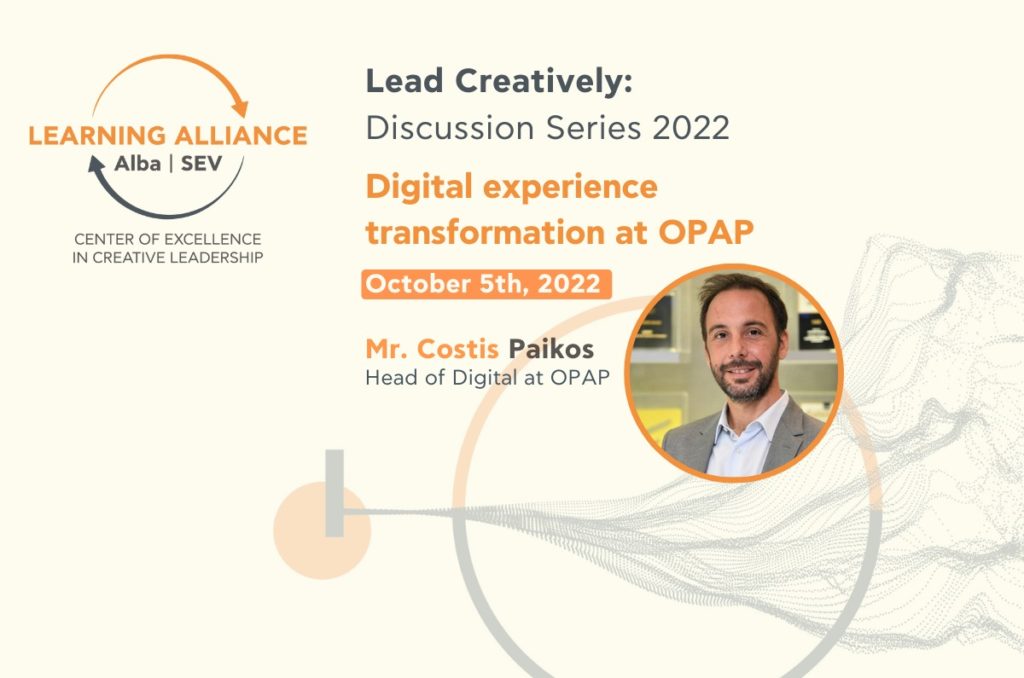
Digital experience transformation at OPAP
The SEV Center of Excellence in Creative Leadership invites you to the fall “Lead Creatively: Discussion Series” event for 2022.
Attend in-person at the Events Hall of The American College of Greece or online, to get an insight into the process, the challenges and the desired effects of the “Digital experience transformation at OPAP” by Mr. Costis Paikos, Head of Digital at OPAP.
The event will take place at the Events Hall of The American College of Greece (Gravias 6, Agia Paraskevi), on Wednesday, October 5, from 15:30 to 17:00 and will also be broadcast via livestream.
The topic is “Digital Experience Transformation at OPAP” and will be explored in a stimulating presentation by Mr. Costis Paikos, Head of Digital at OPAP followed by a thought-provoking conversation with the Center’s Director, Associate Professor Dr. Nikos Mylonopoulos.
Redefining the customer experience is a top priority in every digital transformation program. The ultimate goal is to provide a seamless, omnichannel, digitally-enabled service with an intuitive interface and a strong brand identity. However, these aims often impose conflicting requirements and represent a perpetual aspiration rather than a finite set of short-term objectives.
OPAP is pursuing a large-scale digital transformation program, across channels and customer segments, with an aim to re-define the experiences offered to its customers. The transformation program focuses on 4 main pillars: re-defining OPAP’s footprint in the digital ecosystem; delivering an advanced online gaming proposition; digitizing the experiences in the retail network; and assisting OPAP in becoming a digital-ready company. Special emphasis will be given on the delivery of an IoT ecosystem in OPAP Stores, one of the biggest retail networks in Europe.
During the discussion Mr. Paikos will share challenges, insights and lessons learned, to spark an interactive discussion around one of the hottest topics in the industry at present.
Join us in the ACG Events Hall, to see in action and try for yourself a live demo of the Internet of Things solution that OPAP has developed in collaboration with Bespot, and installed in all its stores.
As Costis Paikos will explain in greater detail, this solution relies on artificial intelligence to reliably and precisely identify the entry and exit of customers in the store, ensuring regulatory compliance and enabling richer customer analytics. Bespot is a fast-growing and award-winning Greek startup that develops deep location intelligence solutions.
Participants will be able to address their comments & questions to the speaker during the event.
The event will be held in the Greek language.
Register here