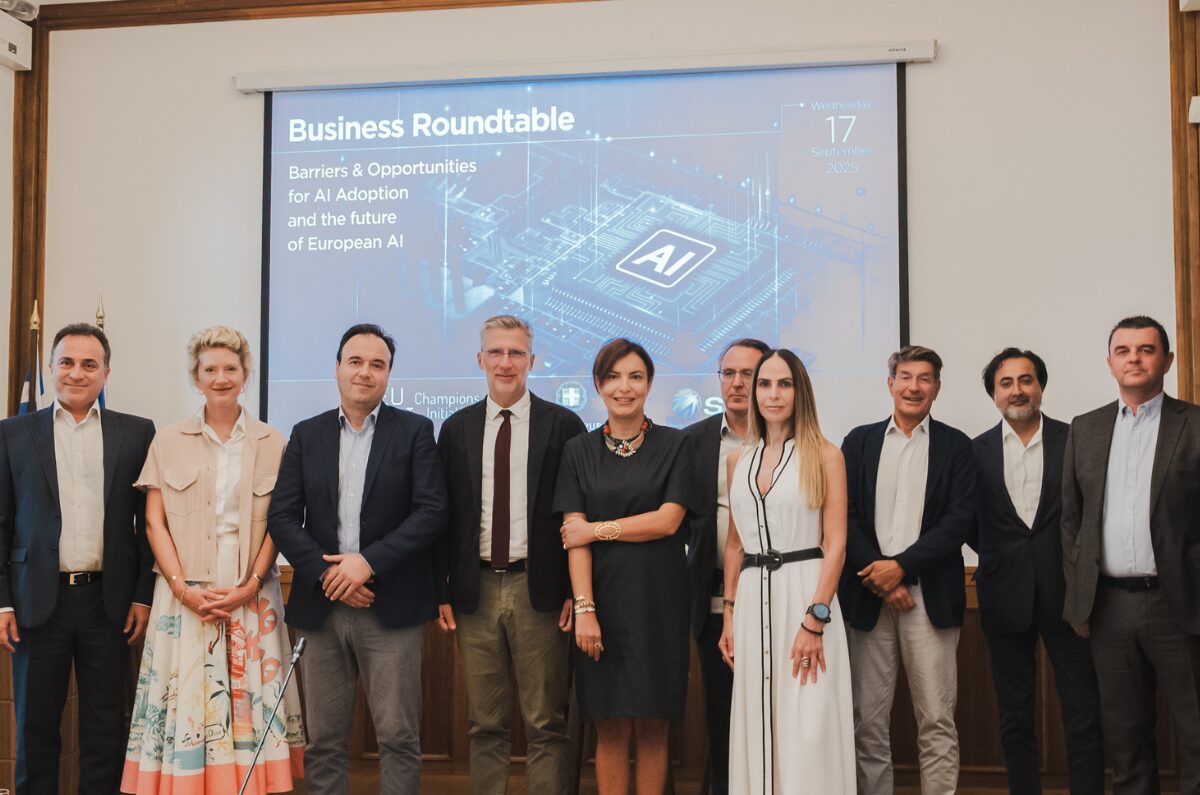
AI Roundtable”: Greece at the heart of Europe’s Dialogue on Artificial Intelligence
“AI Roundtable”: Greece at the heart of Europe’s Dialogue on Artificial Intelligence – An Initiative of the European Commission and General Catalyst, with the Support of the Greek Government and SEV Hellenic Federation of Enterprises
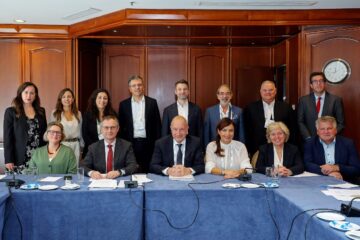
SEV, together with the Greek Government and global investment and transformation company, General Catalyst, co-hosted the Business Roundtable on Artificial Intelligence in Athens, under the EU AI Champions Initiative. This EU initiative is a public-private collaboration that seeks to shape a coherent vision for the future of AI in Europe and beyond – anchored in European values such as human-centric innovation, trust, and transparency. Its aim is to identify, empower, and connect Europe’s most promising AI companies with policymakers, investors, and industrial partners, enabling the EU to compete with global leaders such as the United States and China.
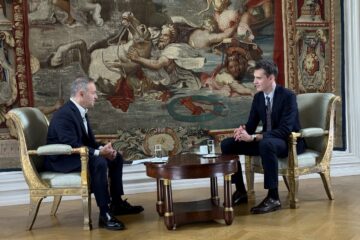
The Greek Government places strong emphasis on the national digital transformation strategy, while stressing that Europe must move from “regulation only” to “regulation plus innovation”, as Prime Minister Kyriakos Mitsotakis recently noted in a discussion with Google DeepMind co-founder and CEO Sir Demis Hassabis. At the same time, SEV actively supports businesses in adopting new technologies and contributes to both national and European consultations on regulatory frameworks. Hosting this Roundtable in Athens is therefore a key step in ensuring Greece has a voice in the European debate shaping the future of AI.
Participants included Minister of State Akis Skertsos, Minister of Digital Governance Dimitris Papastergiou, Jeannette zu Fürstenberg, Managing Director Europe at General Catalyst, Rania Ekaterinari, President of SEV’s Executive Committee, as well as senior representatives from leading industrial and technology companies.
The discussion was held under the Chatham House Rule, allowing participants to exchange views candidly. It focused on agreeing concrete, actionable ways to overcome challenges that hinder the development of a strong Greek and European AI ecosystem and hold Europe back in the global competitiveness race. The discussion aimed to generate concrete use cases of pragmatic digital adoption and recommendations to boost Europe’s innovation capacity, productivity, and technological leadership.
Minister of State, Akis Skertsos stated: “Over the past six years, Greece has gone from being the EU’s ‘black sheep’ to one of Europe’s fastest-growing economies. We have proven that fiscal discipline, pro-investment reforms that cut taxes and red tape, and the digitalization of the state and the economy can transform a country’s trajectory. Today, as we implement our national AI strategy and establish one of the EU’s first AI Factories, we are determined to co-shape the future of our Union by addressing head-on the key dilemmas of our time: Europe must once again become a producer, not just a consumer, of technology—and it must prioritize enabling and encouraging innovation over over-regulation. This is precisely the message of the Draghi Report, which we fully endorse for a strong Greece in a strong Europe, in a rapidly changing world.”
Minister of Digital Governance, Dimitris Papastergiou noted: “Greece has a coherent strategy to harness the opportunities brought by Artificial Intelligence. With data, infrastructure, and talent as our foundations, we are building the basis for a sustainable future of innovation. Our country can emerge as a regional AI hub, playing an active role in Europe and beyond. Our clear objective is a technology that serves people, development, and democracy. We move forward with planning, vision, and confidence into the new digital era.”
Jeannette zu Fürstenberg, Managing Director and Head of Europe at General Catalyst, commented: “Greece exemplifies the kind of public-private collaboration that Europe needs to compete globally in AI. When governments act as true partners, moving at startup speed and serving as anchor customers, we create the flywheel effect that connects startups, industrial champions, policy, capital and talent. The European AI Champions Initiative was born from the urgency to strengthen Europe’s innovation capacity, and Greece demonstrates how ambitious nations can turn strategy into execution. This is the model for keeping AI value creation onshore in Europe while building the resilience our continent needs for long-term competitiveness.”
Rania Ekaterinari, President of SEV’s Executive Committee, stressed in her opening remarks:
“Artificial Intelligence is transforming our world, and Europe must find ways to cooperate more effectively, through deeper public-private partnerships at all levels. Urgent and decisive action is needed, because AI is evolving faster than we are. If we delay, Europe risks remaining a consumer rather than a creator of technology—with consequences not only for competitiveness, but also for its strategic autonomy and security, given its dependence on third countries for critical infrastructure such as powerful cloud systems and advanced semiconductors.”
Finally, Marco Veremis, Chair of SEV’s Technology & Digital Transformation Committee, concluded: “Europe can shape its future in AI by turning its diversity and industrial depth into strengths. To build real momentum, we must invest boldly in research and talent, foster ecosystems where startups and industry collaborate, and adopt smart, enabling regulation that accelerates, not slows, innovation. Manufacturing paired with ΑΙ can become a uniquely European advantage, if supported by flexible frameworks and cross-border cooperation. Each country should focus on areas of true capability, while collectively we set ambitious, realistic goals. With resilience, creativity, and unity, Europe can lead in AI on its own terms, defining progress through its values.”
The Roundtable is part of SEV’s broader strategy to accelerate AI adoption across business and society. Recent initiatives include the “AI in Practice” conference, showcasing concrete applications of AI in the Greek economy; the GenAI Bootcamp in collaboration with Alba Graduate Business School, which has already trained hundreds of executives free of charge; and the forthcoming Practical Compliance Guide for the NIS2 Directive, designed to help companies adapt to the EU’s new cybersecurity framework amid rapid technological change and escalating cyber threats.