“Without a strong European industry, there can be no resilient, secure and strong Europe”
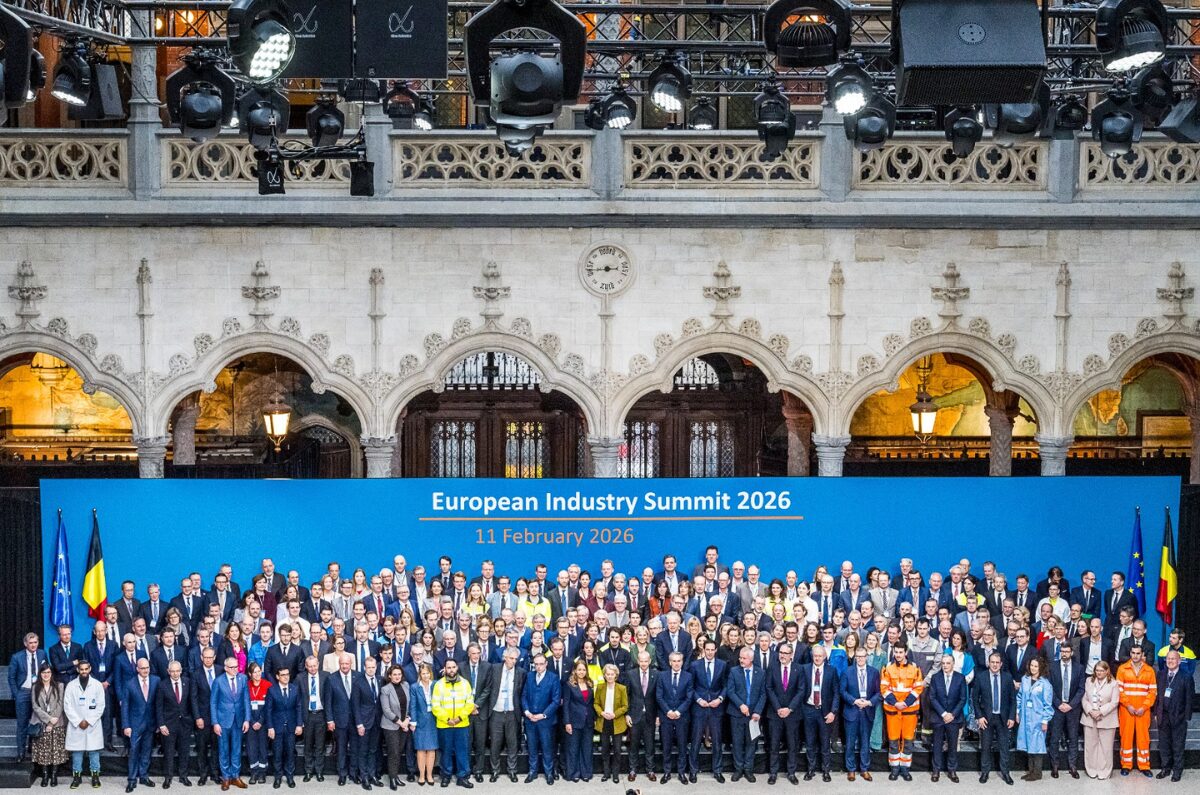
SEV and SVSE participated in the European Industry Summit in Antwerp and joined their voices with more than 600 representatives of European industry who called for immediate and coordinated interventions to support industry, ahead of the informal European Council on competitiveness on 12 February in Alden Biesen.
Participants at the Summit underscored the need for tomorrow’s informal European Council to serve as the starting point for immediate and substantive consultations at the level of Heads of State and Government, with a view to the swift adoption of specific measures to strengthen competitiveness.
SEV was represented by the Director of its Brussels Office and head of European Affairs, Mr. Konstantinos Diamantouros, while SVSE was represented by its Chairman and member of the SEV Board of Directors, Mr. Panos Lolos.
In the Antwerp Declaration, European industry is calling for an emergency package of measures focused on three pillars:
- Reducing energy and CO₂ emissions costs which remain excessively high due both to international prices and to regulated charges. The cost of emissions allowances in the EU is currently the highest internationally, placing a disproportionate burden on industrial production.
- Trade agreements that open new markets and export opportunities, provide access to critical raw materials, and ensure a level playing field for European businesses, including protection against carbon leakage.
- Support for “Made in Europe” products: Measures to stimulate demand for European products through public procurement. Empowering consumers with more choices for net-zero and circular products, based on transparent data on carbon footprints, to avert the risk of further deindustrialisation in Europe, while at the same time creating more high-quality jobs in sectors where Europe has been, and seeks to remain, a leader.
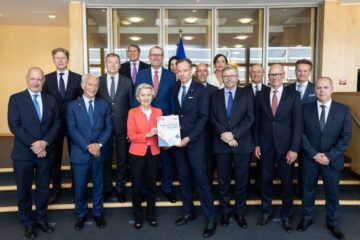
This year’s European Industry Summit brought together more than 600 business leaders, 30 representatives of employers’ organisations, Heads of states and governments of EU Members, and senior officials of the European Commission. Attendees included, among others, the President of France Emmanuel Macron, the Chancellor of Germany, Friedrich Merz, Chancellor Christian Stocker of Austria, as well as the Prime Ministers of the Netherlands, Dick Schoof and Belgium, Bart de Wever. The European Commission was represented by President Ursula von der Leyen. Executive Vice-Presidents Teresa Ribera and Stéphane Séjourné also took part, along with Commissioner Wopke Hoekstra.
The Antwerp Declaration, representing more than 1,300 European companies, associations and trade union organisations, was initially drafted in 2024 and has been co-signed by SVSE.
The President of SEV’s Executive Committee, Ms. Rania Aikaterinari, noted: “The Antwerp Declaration comes to confirm key demands that SEV has already highlighted at the national and European levels, including through the recent joint letter to the Greek Prime minister which was co-signed by the Presidents of SEV and BusinessEurope. Regarding electricity costs, immediate solutions are required. At the same time, the ETS needs to be reassessed within 2026, and it is crucial that there be reliable projections regarding the application of CBAM to exports, in order to avoid the risk of carbon leakage. Competitiveness is not a policy choice; it is a precondition for the viability of European industry.”
Mr. Panos Lolos, Chairman of the Board of Directors of the Association of Industries of Central Greece (SVSE) and member of the SEV Board of Directors, underlined: “European industry today articulated the urgent demand for competitive energy prices, strengthening the internal market and the removal of barriers to access international markets, as well as the need for preferential treatment of products of European origin (‘Made in Europe’) as key priorities for enhancing European competitiveness. Greece cannot be absent from alignment with European reality, especially after a long period of anemic investments. The time for immediate measures is here, as the future of our country, like that of Europe, is the future of industry.”